


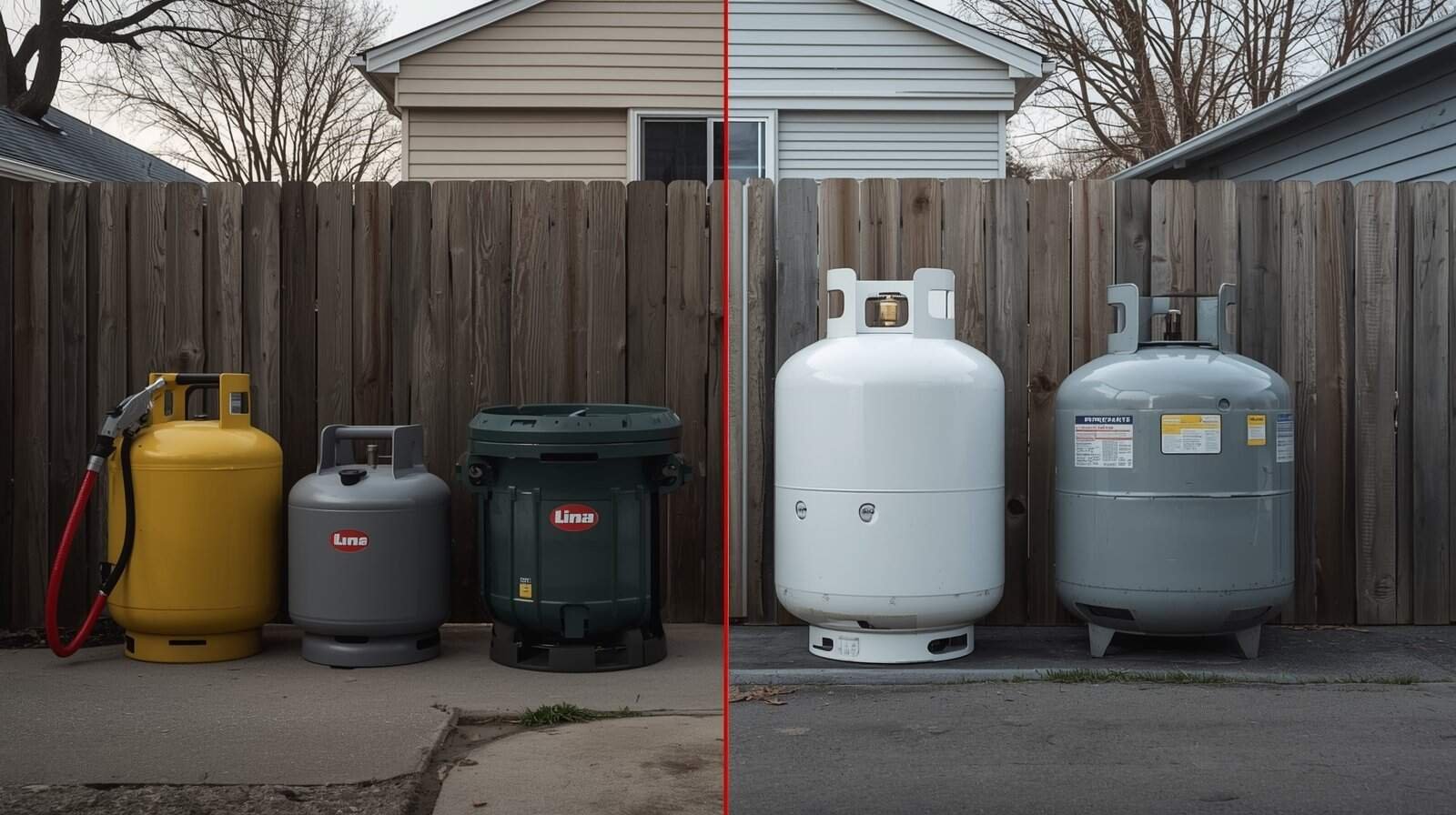
Gasoline and propane can both keep a generator useful during an outage, but they create very different storage risks before the generator is ever started. Gasoline is volatile, produces flammable vapors, and degrades over time. Propane stores longer, but it is kept under pressure and must be handled, transported, and stored correctly.
The safest fuel choice is not just the one that runs your generator. It is the one your household can store, rotate, inspect, and use safely during the kind of outages you actually face. Fuel storage planning should happen before storm season, not in the dark after the power has already gone out.
Why Fuel Storage Risk Matters
Many homeowners think about fuel only in terms of runtime: how long the generator can operate before it needs more fuel. That matters, but storage safety matters just as much. A generator fuel plan can fail before the outage begins if the fuel is old, leaking, stored too close to the home, exposed to heat, or kept in the wrong type of container.
Fuel storage risks are not limited to fire alone. Vapors, pressure, leaks, static, container damage, fuel degradation, poor ventilation, and refueling mistakes all create hazards. The risk also changes depending on whether the fuel is stored in a garage, shed, basement, outdoor cabinet, vehicle, or dedicated exterior storage location.
Before choosing a generator fuel, compare not only cost and runtime, but also how safely you can keep that fuel available. For a broader fuel-selection overview, see Generator Fuel Types Compared.
Gasoline Storage Risks Explained
Gasoline is highly volatile. It gives off flammable vapors even at ordinary temperatures, and those vapors can travel away from the container before igniting. A spark, pilot light, water heater, furnace, power tool, outlet, or other ignition source can create danger even if the fuel container itself is not directly next to a flame.
Gasoline also degrades over time. Old gasoline can make a generator harder to start, run rough, surge, clog fuel components, or fail during an outage. That means gasoline storage is not just a fire-safety issue; it is also a reliability issue.
The safest gasoline plan uses approved fuel containers, small practical quantities, clear labels, rotation, stabilizer when appropriate, and a storage location away from living spaces and ignition sources. Do not keep gasoline in random bottles, open containers, damaged cans, or containers not designed for fuel.
Propane Storage Risks Explained
Propane is stored under pressure in cylinders or larger tanks. It does not go stale like gasoline, which makes it attractive for longer-term generator readiness. A properly maintained propane cylinder can remain usable much longer than a can of gasoline that sits through multiple seasons.
That does not make propane risk-free. Propane risks involve pressure, valve damage, leaks, cylinder condition, heat exposure, improper transport, and poor ventilation. A leaking propane cylinder can create a fire or explosion hazard, especially if gas accumulates in an enclosed or low area.
Propane cylinders should be kept upright, protected from damage, away from high heat, and stored according to the cylinder supplier’s instructions and local rules. Do not store propane cylinders in basements, living areas, or enclosed spaces where leaked gas could accumulate.
Indoor vs. Outdoor Storage Risk Differences
Indoor fuel storage is where many household risks increase. Gasoline vapors can accumulate in enclosed areas and find ignition sources. Propane can also become dangerous if a leak occurs in a basement, garage, utility room, or other poorly ventilated space.
Gasoline should not be stored in living spaces. Propane cylinders should not be brought indoors for storage, heating, cooking, or generator use. A garage or attached structure may still create risk because vapors or gas can move toward ignition sources or into the home.
Outdoor storage usually reduces vapor and gas accumulation risk when the fuel is stored correctly. However, outdoor storage still needs protection from damage, heat, flooding, tampering, and direct exposure that could weaken containers or create leaks.
Which Fuel Is Safer to Store?
Neither fuel is automatically safe. Gasoline is more volatile and requires rotation because it ages. Propane is more stable over time, but it is stored under pressure and depends on cylinder, valve, and tank integrity.
For many homeowners, propane is easier to keep ready for long-term generator planning because it does not degrade like gasoline. That is one reason propane is popular for standby generators and dual-fuel portable generators. But propane still needs proper outdoor storage, safe transport, and leak awareness.
Gasoline may be easier to find during normal conditions and is supported by many portable generators, but it requires more active management. If you choose gasoline, you need a rotation plan. If you choose propane, you need a cylinder or tank inspection plan. The safer option is the one you can manage consistently.
How Fuel Choice Affects Generator Readiness
Fuel storage affects whether your generator will actually help during an outage. A generator that needs gasoline may be useless if the only fuel on hand is stale, contaminated, or stored in a leaking container. A propane generator may be limited if the cylinder is nearly empty or the tank cannot support the generator’s runtime needs.
Fuel choice also affects how you operate during a long outage. Gasoline may require repeated refueling and more trips to find fuel. Propane may reduce fuel-aging concerns, but smaller cylinders may not last as long as expected under heavy loads.
If you are comparing propane with natural gas for generator planning, review Propane vs Natural Gas Generators. That guide focuses on fuel storage, utility dependence, installation, maintenance, and outage readiness.
How Storage Risk Affects Refueling Safety
Storage conditions directly affect refueling safety. Old containers, swollen cans, leaking caps, poor labeling, or fuel stored near heat can make refueling more dangerous. Rushing during an outage makes those risks worse.
Gasoline refueling is especially risky because spilled fuel and vapors can ignite. A generator should be shut down and allowed to cool before refueling. Do not pour gasoline into a running or hot generator, and do not refuel near flames, sparks, smoking materials, or hot surfaces.
Propane changes the refueling problem into a cylinder-handling problem. Check valves, hoses, and fittings. Keep cylinders upright. Do not use damaged cylinders. If you smell gas, hear hissing, or suspect a leak, move away and follow supplier or emergency guidance.
For generator-specific fuel handling, review Refueling a Generator Safely.
Quantity Matters More Than Most Homeowners Think
Keeping more fuel on hand can increase outage runtime, but it also increases storage responsibility. More gasoline means more vapor risk, more containers to inspect, more rotation, and more spill potential. More propane means more cylinders or a larger tank, each with placement and inspection requirements.
Do not store fuel randomly just because a storm is coming. Decide how much fuel you actually need based on your essential loads, expected runtime, generator fuel consumption, and whether you plan to run the generator continuously or in scheduled windows.
A load-management plan can reduce fuel storage pressure. If you rotate refrigerators, pumps, chargers, and fans instead of trying to power everything at once, your generator may use less fuel and run more safely. See Generator Load Rotation Plan for a practical way to reduce overload and fuel waste during an outage.
Fuel Storage and Long Outages
A short outage may only require a small amount of fuel. A multi-day outage is different. You need to think about how much fuel is safe to store, where it will be stored, whether roads will be open, whether local fuel stations have power, and how long essential loads can wait between generator runs.
Gasoline storage can become harder during long outages because fuel may be scarce, stations may be closed, and stored fuel may run out quickly if the generator runs continuously. Propane may be easier to store ahead of time, but cylinder supply and delivery can still be limited during widespread storms.
Fuel planning should be connected to your broader outage plan. For multi-day readiness, use a guide like 7-Day Power Outage Plan so fuel, food, refrigeration, water, medical needs, phone charging, and relocation decisions are planned together.
Warning Signs Stored Fuel Is Not Safe to Use
Do not use stored fuel if the container is damaged, swollen, leaking, rusted, unlabeled, or contaminated. Do not use gasoline that smells unusually sour, looks separated, contains water, or has been stored too long without a rotation plan.
For propane, do not use a cylinder with visible damage, heavy rust, missing parts, a damaged valve, a suspected leak, or an expired certification where recertification is required. If you smell gas or hear hissing, do not test the cylinder near ignition sources.
If a fuel container makes you pause, treat that as a warning. During an outage, people often take risks because they need power. Fuel uncertainty is not the place to improvise.
When to Review Local Safety Guidance
Local fire codes, fuel-storage rules, HOA rules, landlord requirements, and insurance considerations may limit how much gasoline or propane you can store and where it can be kept. These rules may vary by municipality, housing type, and property layout.
This is especially important for apartments, condos, attached garages, townhomes, small lots, and homes with limited outdoor storage. What is practical for a rural property may be unsafe or prohibited in a dense neighborhood.
Before building a larger fuel storage plan, check local fire department guidance, fuel supplier instructions, generator manual requirements, and container labeling. Local guidance should override generic internet advice.
FAQ
Is propane safer to store than gasoline?
Propane is often easier for long-term storage because it does not go stale like gasoline, but it is still stored under pressure and must be kept in proper cylinders or tanks. Gasoline is more volatile and requires more rotation, but both fuels need safe storage.
Can I store gasoline in my garage for a generator?
Gasoline should be stored only in approved containers and away from ignition sources, heat, and living spaces. Attached garages can create added risk because vapors may reach appliances, pilot lights, outlets, or the home. Check local rules before storing fuel.
Can propane cylinders be stored indoors?
No. Propane cylinders should not be stored in living spaces, basements, or enclosed indoor areas. A leaking cylinder can allow gas to accumulate dangerously.
Does propane go bad like gasoline?
No. Propane does not degrade like gasoline, which is one reason it is attractive for backup power. However, cylinders, valves, hoses, and tanks still need inspection and safe handling.
How much generator fuel should I store?
Store only what you can keep safely and legally. Estimate fuel needs based on essential loads, generator consumption, outage duration, and whether you will rotate loads instead of running the generator continuously.
Conclusion
Gasoline and propane both support generator readiness, but they create different storage risks. Gasoline is volatile, vapor-producing, and time-sensitive. Propane stores longer but depends on safe pressure containment, cylinder condition, valve integrity, and proper outdoor handling.
The best fuel plan is not just the one with the longest runtime. It is the one your household can store safely, inspect regularly, rotate or refill responsibly, and use without creating fire, vapor, pressure, or refueling hazards. Choose the fuel that fits your generator, your outage pattern, your property, and your ability to manage the storage risk correctly.