


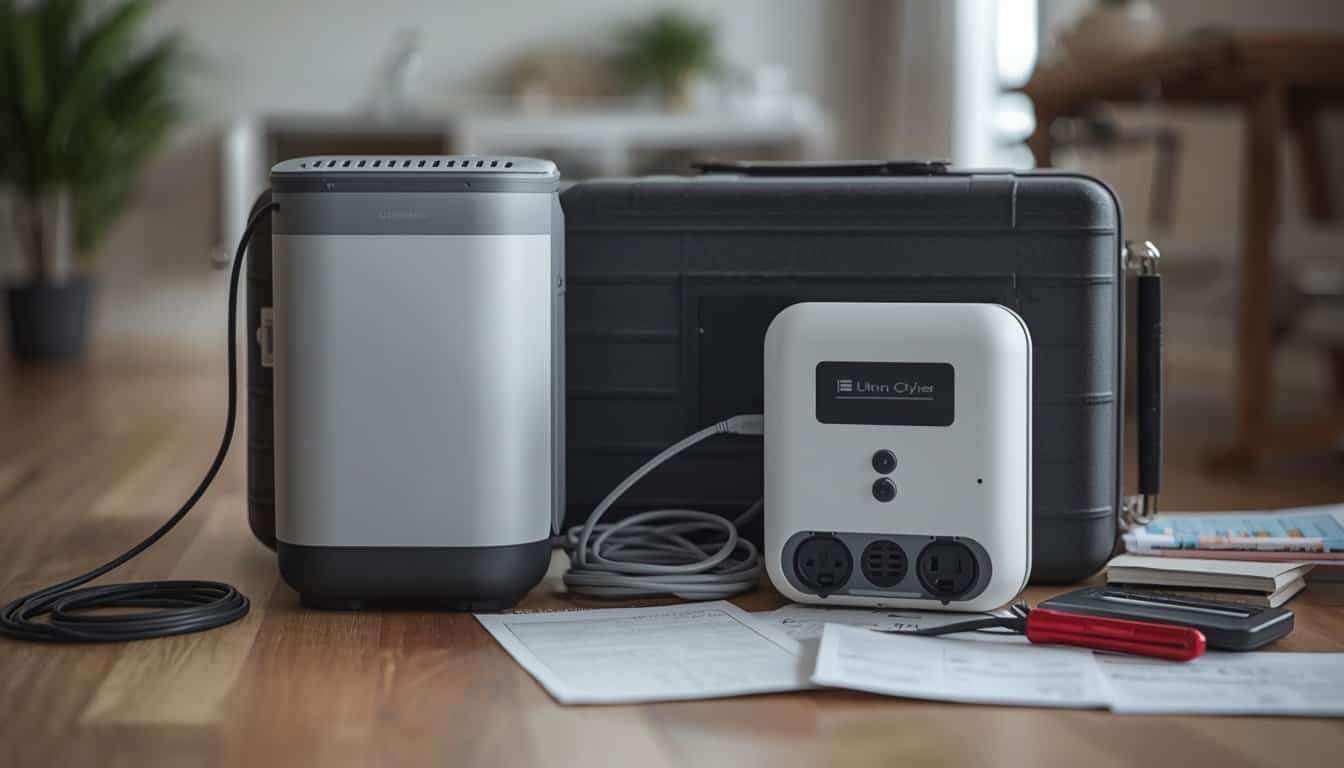
A power outage can become urgent when someone in the home relies on an oxygen concentrator. The safest plan is not simply to buy a battery or generator, but to confirm backup oxygen options, understand the device’s power needs, and know exactly when to call the oxygen supplier, healthcare provider, or emergency services.
Oxygen concentrator backup power should be planned with the equipment provider before an outage occurs. Ask what backup oxygen supply is available, whether your concentrator can safely run from a battery, portable power station, vehicle charger, or generator, how long each option lasts, and what action to take when backup oxygen or battery time starts running low.
Start With the Oxygen Supplier, Not the Battery
The first step is to contact the oxygen supplier or durable medical equipment provider that supports the concentrator. They can explain whether the equipment has an approved backup battery, whether a portable oxygen concentrator is appropriate, whether backup cylinders are available, and what the household should do if the power fails.
This conversation matters because oxygen concentrators are not all the same. A stationary home concentrator may have very different power needs than a portable oxygen concentrator. Some devices may have battery options, some may require a specific charger, and some households may need a non-electric oxygen backup that does not depend on the grid.
Write down the supplier’s emergency phone number, after-hours process, oxygen delivery instructions, and backup equipment steps. This should become part of your broader Backup Power for Medical Devices at Home plan so caregivers, family members, and neighbors know what to do even if the main caregiver is not available.
Ask Whether You Need Backup Oxygen Cylinders
For many oxygen users, the most important backup is not a battery. It may be a stand-alone oxygen cylinder or other supplier-approved emergency supply that does not require electricity. The oxygen supplier can tell you whether this applies to your situation, how many cylinders are appropriate, where they should be stored, and how long they may last under the prescribed flow settings.
Make sure someone in the household knows how to use the backup oxygen supply before the outage. That includes opening the cylinder, reading the gauge if applicable, connecting the tubing correctly, and recognizing when the supply is getting low. Backup equipment that no one knows how to use is not a real emergency plan.
Do not wait until a storm is already underway to request backup oxygen. Delivery delays, road closures, high demand, and supplier hours can all interfere with last-minute planning. If your provider says backup cylinders are part of your plan, confirm refill and replacement procedures before severe weather season.
Confirm the Concentrator’s Power Requirements
Before choosing backup power, identify the concentrator’s electrical requirements. Look for watts, amps, volts, or power-adapter information on the device label, power brick, user manual, or supplier paperwork. If the numbers are unclear, ask the supplier to explain what size backup power source is appropriate for that specific concentrator.
Oxygen concentrators can have meaningful power demands because they are active medical devices, not simple chargers. A backup battery or portable power station that handles phones and lights may not be suitable for a concentrator, especially if the device needs steady power for many hours. Runtime also changes with settings, device age, battery condition, temperature, and whether other devices are connected at the same time.
For rough planning, the Battery Backup Runtime Calculator can help estimate how long a listed battery may support a stated electrical load. Treat the result as a planning estimate only. Your oxygen supplier’s device-specific guidance should always control medical equipment decisions.
Understand Battery, Portable Power Station, and Vehicle-Charging Limits
Batteries can be useful, but they are limited. A portable oxygen concentrator battery may provide short-term mobility or a temporary bridge, while a larger portable power station may help in some home situations if the supplier confirms compatibility. Neither option should be treated as unlimited protection.
Ask how many batteries you need, how long each battery should last under your prescribed use, and how long recharging takes. Also ask whether a vehicle charger is approved for the device and whether it is meant for emergency charging only or actual operation. Do not assume that a car outlet, inverter, or generic adapter is safe for oxygen equipment without supplier confirmation.
Build margin into the plan. If a battery is expected to last several hours under ideal conditions, do not wait until the final minutes to make a decision. Batteries age, cold temperatures can reduce performance, and outages often last longer than expected.
Use Generators Carefully Around Oxygen Equipment
A generator may be part of a longer outage plan, but it brings two separate safety concerns: carbon monoxide from exhaust and power stability for the equipment. The generator must stay outdoors and away from windows, doors, garages, vents, and enclosed spaces. Never move it closer to the home because oxygen equipment is important.
Ask the oxygen supplier whether the concentrator can be powered directly by a generator or whether the generator should be used only to recharge batteries or run other household essentials. If generator output is unstable, overloaded, or delivered through unsafe cords, sensitive equipment may alarm, reset, or behave unpredictably.
Keep generator load simple when oxygen equipment is involved. Avoid running refrigerators, heaters, microwaves, well pumps, and oxygen equipment all at once unless the system has been properly planned. If you are also protecting refrigerated medications, coordinate that plan with How to Keep Medications Cold During a Power Outage so power priorities do not conflict during a long outage.
Create a Written Power-Outage Action Plan
A written plan helps the household act quickly instead of debating what to do during an outage. The plan should list the oxygen supplier, healthcare provider, emergency contacts, backup oxygen location, battery locations, charger locations, transportation options, and the point at which the household will call for help or relocate.
Use time-based decision points. What happens in the first 15 minutes? What happens after the first hour? What happens when backup oxygen drops to a certain level? What if roads are unsafe or the person cannot be moved easily? These decisions should be discussed before the outage, not after the battery is already low.
Your broader 7-Day Power Outage Plan should include oxygen backup, communication, medication storage, cooling or heating needs, caregiver availability, and transportation. Oxygen planning should not sit in a separate notebook where no one can find it.
Register for Utility and Community Notifications
Contact the electric utility before an outage to ask whether it has medical, life-support, critical care, or priority-notification programs. These programs do not guarantee uninterrupted power or faster restoration, but they may help with outage communication, restoration awareness, and emergency planning.
Also ask local emergency management, public health, senior services, disability services, or community assistance programs what options exist during extended outages. Some communities open cooling centers, warming centers, charging centers, or medical-needs shelters during major events, but eligibility and services vary by location.
Make sure the household can receive alerts even if the power and internet are down. A charged phone, backup charger, weather radio, printed contact list, and family communication plan can help prevent isolation. If you need a structured alert setup, use Severe Weather Alerts and Family Communication Plans to organize who gets notified and when.
Practice the Non-Emergency Parts of the Plan
Do not wait for a storm to discover that a battery is missing, a charger is in the wrong bag, or no one knows how the backup oxygen works. Practice the non-emergency parts of the plan while the person is safe and normal power is available. This may include locating supplies, reviewing the written steps, charging batteries, and confirming phone numbers.
Only test the concentrator or backup oxygen according to supplier and provider instructions. Do not interrupt oxygen therapy or change flow settings as a practice exercise. The goal is to verify readiness, not to create a medical risk.
After practice, update the written plan. Remove outdated phone numbers, note battery ages, replace missing supplies, and make sure caregivers understand the early escalation trigger. A plan that is updated once a year is much more useful than one created once and forgotten.
FAQ
Can an oxygen concentrator run on a battery backup?
Some oxygen concentrators can use approved batteries or compatible backup power, but this depends on the device. Ask the oxygen supplier or manufacturer what battery or power source is approved for your specific concentrator.
Should I use a generator for an oxygen concentrator?
A generator may help during longer outages, but it must be used outdoors and safely away from the home. Ask the supplier whether the concentrator can run directly from generator power or whether the generator should be used to recharge approved batteries.
Do I need backup oxygen tanks if I have a concentrator?
Many oxygen users should discuss non-electric backup oxygen with their supplier because concentrators depend on electricity. The supplier can explain whether cylinders or another backup supply are appropriate and how long they may last under the prescribed settings.
When should I call for help during an outage?
Call early if backup oxygen or battery power is running low, the concentrator alarms or behaves unexpectedly, the person’s condition changes, or you are unsure whether the plan can safely last until power returns.
Conclusion
Oxygen concentrator backup power is a medical-preparedness plan, not just an equipment purchase. Start with the oxygen supplier, confirm backup oxygen options, document the concentrator’s power requirements, and decide in advance when to use batteries, generators, relocation, or emergency help.
The safest plan is layered and written down. Know how long each backup option should last, who to call, where supplies are stored, and what trigger means it is time to leave the home or seek emergency support before oxygen continuity becomes uncertain.