


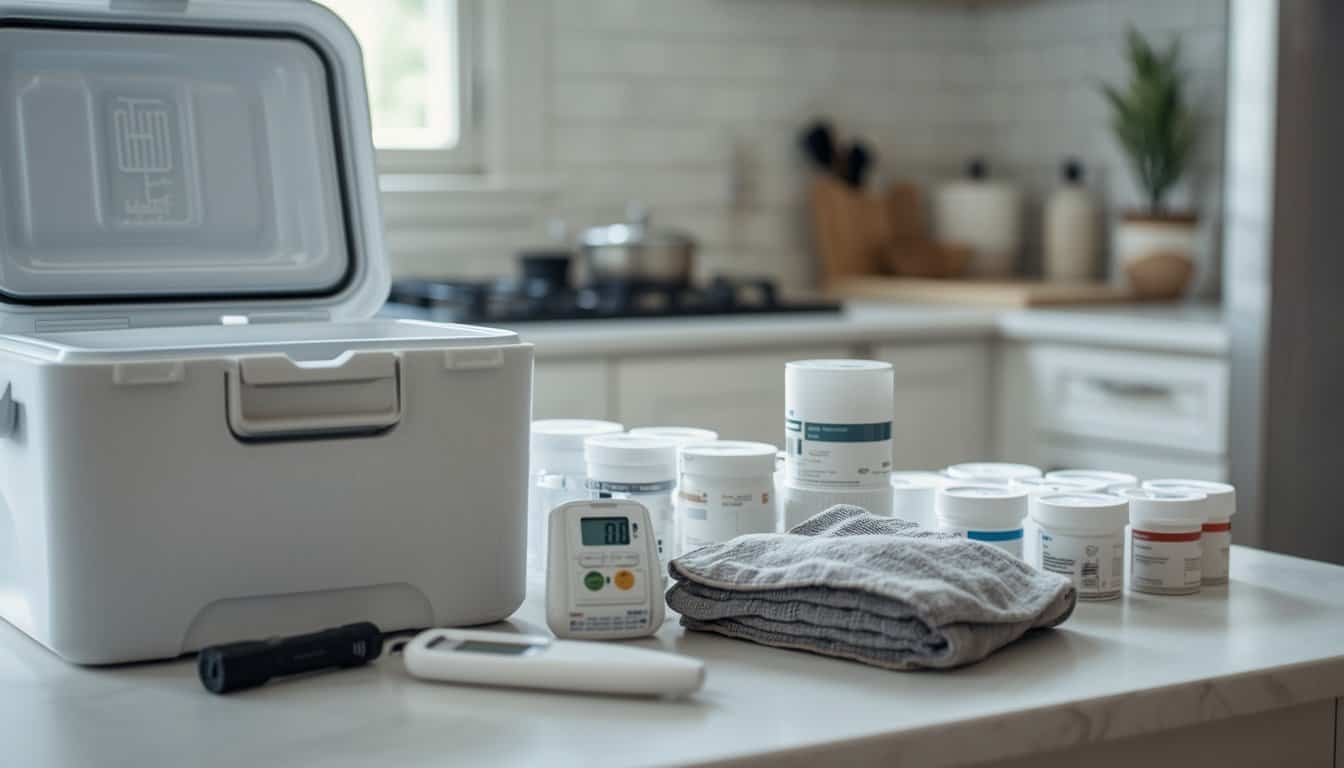
A power outage can quickly create uncertainty when someone in the home relies on refrigerated medication. The safest plan is not to guess whether a medicine is still usable, but to slow temperature changes, track what happened, and contact a pharmacist, prescriber, or manufacturer when storage conditions are unclear.
To keep medications cold during a power outage, start by keeping the refrigerator closed, identify which medicines truly require refrigeration, move them to an insulated cooler only when needed, use a thermometer if available, and avoid freezing the medication with direct ice contact. This guide is for household preparedness only and should not replace medication labels, pharmacy guidance, or medical advice.
Start by Identifying Which Medications Need Refrigeration
The first step is to know which medicines are actually temperature-sensitive. Some medications must remain refrigerated to maintain strength, while others are stored cold before opening but may have different instructions once in use. Do not assume that all injectable, liquid, or specialty medications follow the same rules.
Create a short medication storage list before the next outage. Include the medication name, where it is stored, whether it must stay refrigerated, the pharmacy phone number, and any special instructions from the label or pharmacist. Keep this list with your household emergency supplies so another family member or caregiver can act quickly if the person who normally manages the medication is not available.
This should connect with your broader medical outage planning. If your household also relies on powered medical equipment, review Backup Power for Medical Devices at Home so medication cooling, device power, communication, and escalation decisions are part of one plan instead of separate last-minute decisions.
Keep the Refrigerator Closed at First
In the early stage of an outage, the best move is usually to keep the refrigerator door closed. Opening the door repeatedly lets cold air escape and makes the temperature rise faster. If the outage has just started and the refrigerator was already cold, leaving the medicine in place may be safer than moving it too soon without a prepared cooler.
Assign one person to manage refrigerator access. If food, drinks, and medication are all stored in the same refrigerator, avoid repeated door openings for convenience items. The medication plan should take priority over casual access, especially when the outage time is unknown.
Use your early-outage checklist to avoid scattered decisions. The Power Outage Checklist: First 15 Minutes, First 4 Hours, First 24 Hours can help you organize immediate actions while you protect medication, communication, lighting, and medical-device needs.
Move Medication to a Cooler Only When It Helps
An insulated cooler can help during a longer outage, but it should be prepared carefully. The goal is to keep medication cool without freezing it, soaking it, crushing packaging, or exposing it to uneven cold spots. A cooler that is packed too aggressively with ice can be just as risky as leaving medicine in a warming refrigerator.
Use a clean insulated cooler or medical storage bag if you have one. Place cold packs or ice in sealed bags, keep medication in its original packaging when possible, and create a barrier between medication and frozen packs using a towel, cardboard divider, or separate sealed container. If you have a thermometer, place it inside the cooler so you can track conditions instead of guessing.
Do not place medication directly against ice or frozen gel packs unless the medication’s instructions specifically allow it. Many temperature-sensitive medicines should be kept cool but not frozen. Freezing can damage certain medications and may make them unsafe or less effective.
Be Especially Careful With Insulin
Insulin is one of the most common medications people worry about during power outages, but storage rules can vary by product and whether the insulin is unopened, opened, in use, or exposed to heat. Many insulin products are normally stored refrigerated before use, but labels and manufacturer guidance matter more than general internet advice.
During an outage, try to keep insulin cool and away from heat and sunlight, but do not freeze it. If insulin has been frozen, exposed to excessive heat, left in direct sun, or looks unusual, contact a pharmacist or healthcare professional before relying on it. Do not assume that “cool enough” means safe if you do not know the actual conditions.
If insulin or another refrigerated medication is medically necessary and replacement is not immediately available, do not make a discard decision in isolation. Follow the medication label, pharmacy guidance, or emergency medical advice. If you cannot reach your usual pharmacy, contact another pharmacy, an urgent care line, local emergency management, or emergency services if the situation becomes medically urgent.
Track Time, Temperature, and What Changed
Good notes can help a pharmacist or prescriber give better guidance after the outage. Write down when the power went out, when the refrigerator or cooler was opened, when the medication was moved, whether a thermometer was used, and whether the medication was exposed to heat, sunlight, freezing, or water.
Do not rely on memory after a stressful outage. A simple note on paper, a phone note, or a printed medication log can make the difference between a clear pharmacy conversation and a vague guess. If multiple caregivers are involved, the notes also prevent conflicting assumptions about what happened.
For longer outages, connect medication cooling to your full household plan. A 7-Day Power Outage Plan should include medication storage, ice access, pharmacy contacts, transportation, backup power, and a relocation option if home conditions become unsafe.
Use Backup Power Strategically
Backup power can help protect refrigerated medications, but it should be used strategically. In many homes, the goal is not to power everything at once. The priority may be keeping a refrigerator cold, recharging a medical cooler, powering a small medication refrigerator, or maintaining communication so you can reach a pharmacy or provider.
If you plan to use a portable power station or battery backup for a small refrigerator or medication cooler, confirm the device’s wattage, startup demand, and runtime expectations before an outage. For rough planning, the Battery Backup Runtime Calculator can help estimate how long a battery may support a listed load. Treat the result as a planning estimate, not a medication safety guarantee.
Generator use requires extra caution. A generator must be used outdoors and safely away from windows, doors, garages, porches, and vents. Do not move a generator closer to the house just to protect medicine. If the medication is essential and safe storage cannot be maintained, early relocation to a powered location may be safer than trying to stretch an unsafe setup.
Know When to Replace Medication
Some refrigerated medications may need replacement after extended exposure to room temperature or heat, unless the label, pharmacist, or manufacturer says otherwise. This is why documentation matters. The safer question is not “Does it look okay?” but “Was it stored within the conditions required for this specific medication?”
Visual appearance is not enough. A medicine may look normal even if heat or improper storage has reduced its strength. On the other hand, some products may have label-approved room-temperature windows under specific conditions. The only safe way to know is to check the medication’s instructions and ask a qualified professional.
If the medication is not life-sustaining, set aside questionable medicine until a pharmacist tells you whether it can still be used. If the medication is essential and no replacement is available, follow professional guidance and seek replacement as soon as possible.
What Not to Do During an Outage
A few common mistakes can make medication storage worse. Do not leave refrigerated medication in a hot car, sunny window, garage, porch, or outdoor cooler exposed to heat. Do not bury medication directly in loose ice where labels can get wet and the medicine can freeze. Do not move medication back and forth repeatedly between warm and cold locations without a reason.
Avoid opening the refrigerator or cooler just to check repeatedly. Every opening changes the temperature. Use a thermometer and a written log instead of frequent visual checks when possible.
Do not wait until the situation becomes urgent to call for help. Your 72-Hour Emergency Kit for Power Outages should include pharmacy contacts, medication storage notes, a small thermometer if appropriate, backup cold packs, and a plan for getting replacement medication if the outage extends beyond your safe storage window.
FAQ
How long can refrigerated medicine stay out during a power outage?
It depends on the medication, the label, the temperature, and how long the refrigerator or cooler stayed cold. Check the medication instructions and contact a pharmacist or manufacturer if storage conditions are uncertain.
Can I put insulin directly on ice?
Do not place insulin directly against ice or frozen packs unless the product instructions specifically allow it. Insulin should generally be kept cool and protected from heat, but freezing can damage it.
Is medicine safe if it still looks normal?
Not necessarily. Some medicines can lose strength without changing appearance. If a refrigerated medication may have become too warm or frozen, ask a pharmacist before relying on appearance alone.
Should I throw away refrigerated medication after a long outage?
Do not guess. Some medications may need replacement after extended exposure, while others have specific label instructions. If the medication is life-sustaining and no replacement is available, seek professional guidance immediately and replace it as soon as possible.
Conclusion
Keeping medications cold during a power outage is a planning problem, not a guessing game. Know which medications require refrigeration, keep the refrigerator closed early, prepare an insulated cooler carefully, avoid freezing, and document what happened so a pharmacist can help you make a safer decision.
The strongest plan is built before storm season: medication list, pharmacy contacts, cooler supplies, thermometer, backup power options, and an early relocation or replacement plan. When storage conditions are uncertain, treat the medication as a serious health priority and get professional guidance before relying on assumptions.