


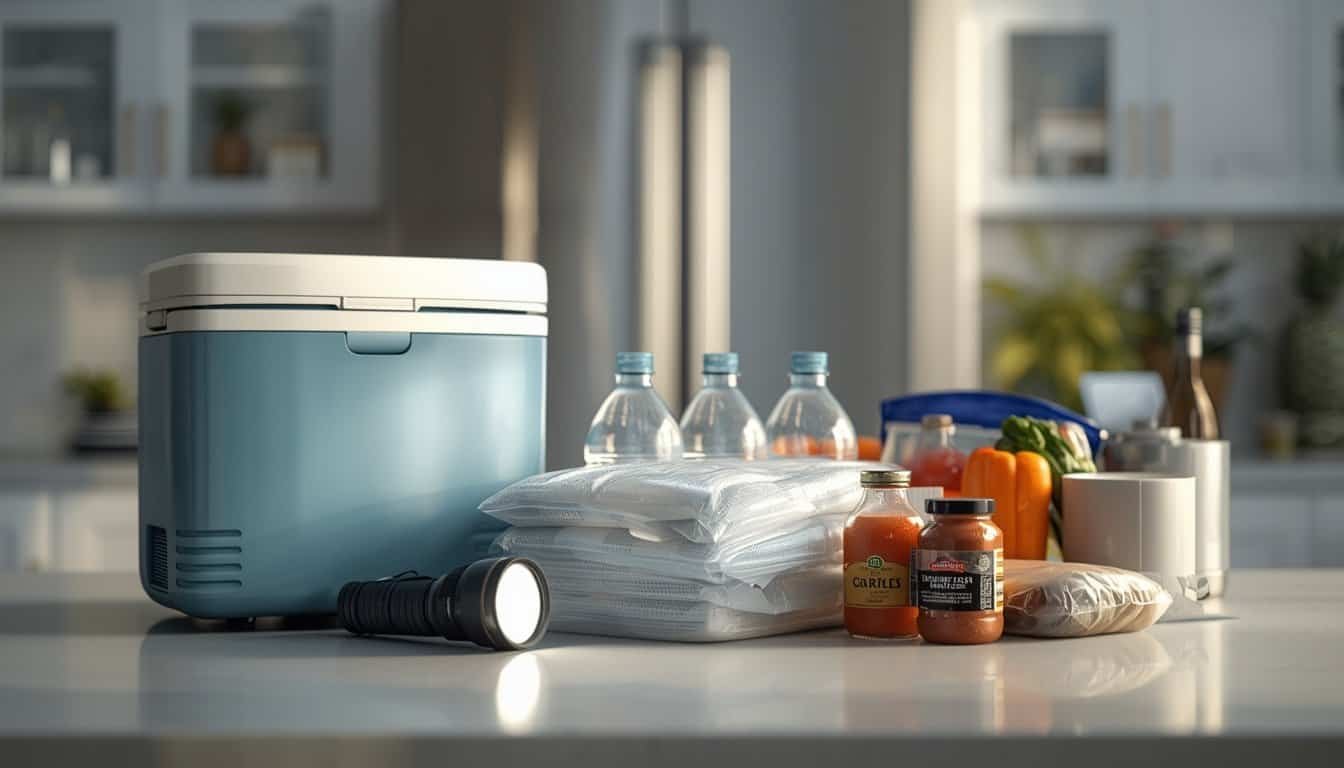
Food safety becomes harder to judge during a power outage because cold food can look, smell, and taste normal even after it has spent too long in the danger zone. The safest plan is to track time, keep doors closed, use thermometers when available, and discard risky food when temperature history is uncertain.
As a general household rule, a closed refrigerator can usually keep food safely cold for about 4 hours, a full freezer for about 48 hours, and a half-full freezer for about 24 hours. Those windows depend on the doors staying closed, the appliance starting cold, and the food remaining at safe temperatures. When perishable food has been above 40°F for too long, it should be thrown out rather than tasted or “tested” by smell.
Start the Clock When the Power Goes Out
The first food-safety decision is not what to throw away. It is when to start tracking the outage. Write down the approximate time power failed, then avoid opening the refrigerator or freezer unless you have a clear reason. Every door opening lets cold air escape and shortens the safe window.
If the outage is brief and the refrigerator door stays closed, most households do not need to start moving food immediately. The bigger risk is repeated checking, rearranging, or opening the door for drinks and snacks. One person should manage refrigerator access so the appliance stays closed as much as possible.
This is why food safety should be part of your first-hour outage routine. The Power Outage Checklist: First 15 Minutes, First 4 Hours, First 24 Hours can help you handle early decisions without scattering attention across lighting, phones, appliances, medical needs, and food all at once.
How Long a Refrigerator Usually Stays Cold
A refrigerator can usually keep food at a safe temperature for about 4 hours during a power outage if the door remains closed. That does not mean every item is automatically safe after any outage. It means the closed refrigerator gives you a short planning window before perishable food becomes more questionable.
Perishable foods include items such as meat, poultry, seafood, milk, eggs, soft cheeses, cut fruit, cooked leftovers, and many prepared foods. These are the foods most likely to become unsafe if the refrigerator warms too much for too long. Condiments and shelf-stable items may follow different rules, but high-risk perishables deserve the most caution.
If you have an appliance thermometer, use it. A refrigerator should be at or below 40°F for normal cold storage. If the refrigerator or food has been above 40°F for 4 hours or more, discard perishable refrigerated food. If you do not know how warm the food became or how long it was warm, the safer choice is to throw out the questionable items.
How Long a Freezer Usually Stays Cold
A freezer gives you more time than a refrigerator if the door stays closed. A full freezer can often hold safe temperatures for about 48 hours, while a half-full freezer may hold for about 24 hours. The difference matters because frozen food helps keep other frozen food cold, and empty air space warms faster.
Keep the freezer closed unless you need to move food to another safe cold location. If power returns within the expected freezer window, check the food and the appliance temperature before deciding what to keep. Food that still contains ice crystals or remains at a safe cold temperature may often be kept or refrozen, but food that has fully thawed and warmed too much should be discarded.
A freezer thermometer makes the decision much clearer. Without one, inspect food packages carefully for ice crystals and signs of thawing, but do not rely on appearance alone for high-risk foods. Meat, poultry, seafood, and prepared meals deserve extra caution if they have thawed and warmed.
Use 40°F as the Key Decision Point
The most important number for outage food safety is 40°F. Refrigerated perishable food should be kept at or below that level. Once perishable food has been above 40°F for 4 hours or more, it becomes a discard item rather than a “maybe.”
This is where many households make mistakes. Food may still feel cool, smell fine, or look unchanged even after bacteria have had time to grow. Taste and smell are not reliable safety tests. Temperature history matters more than appearance.
Use a thermometer if one is available. If no thermometer is available, use time and door-opening history. A refrigerator that has been without power for many hours and opened repeatedly should be treated differently from one that stayed closed during a short outage.
What to Move to a Cooler First
If the outage is expected to last beyond the refrigerator’s safe window, use a cooler strategically. Move the most important perishable foods first, especially items needed for medical, dietary, infant, or near-term meal needs. Do not empty the refrigerator casually if you do not have enough ice, gel packs, or cooler space to keep the food at 40°F or below.
A cooler works only if it stays cold enough. Use ice, frozen gel packs, or frozen water bottles, and keep the cooler closed as much as possible. Place it in a cool interior location, away from sunlight, garages, porches, vehicles, fireplaces, and hot rooms.
For households managing medical devices or refrigerated medications at the same time, food should not compete with higher-priority medical storage. Medication storage decisions need pharmacist or provider guidance, while food-safety decisions should follow food temperature rules. Your broader 72-Hour Emergency Kit for Power Outages should include cooler supplies, thermometers, shelf-stable food, and ice-planning options before storm season.
Plan Meals Around What Will Spoil First
During a longer outage, meal planning should protect safety and reduce waste without encouraging risky food use. Use safe refrigerated perishables early while they are still within the safe window, then shift to shelf-stable foods, canned goods, dry goods, and no-cook meals. Do not keep opening the refrigerator to “see what looks good.”
If you have a grill, camp stove, or outdoor cooking method, use it only outdoors and according to safety instructions. Never bring outdoor cooking equipment, charcoal grills, propane burners, or fuel-burning devices inside the home, garage, porch, or enclosed space. Carbon monoxide risk is more serious than saving refrigerated food.
For multi-day outages, food planning belongs inside your full 7-Day Power Outage Plan. That plan should include shelf-stable meals, water, manual can openers, cooler strategy, cooking safety, sanitation, medication needs, and when to leave the home if heat, cold, flooding, or medical needs make staying unsafe.
Heat Waves Make Food Decisions More Urgent
Hot weather can make outage food safety harder because indoor temperatures rise, coolers warm faster, and ice may be harder to find. A refrigerator or freezer still follows the same basic safety principles, but the surrounding conditions can reduce your margin for error once food is moved out of the appliance.
During a heat wave, prioritize closed doors, thermometers, cool interior locations, and early decisions. Do not store coolers in garages, vehicles, direct sun, or outdoor spaces where temperatures can climb quickly. If the home is becoming unsafe for people, do not stay only to protect food.
Food safety should never outrank heat safety. If the outage is happening during extreme heat, review Heat Wave + Power Outage Planning so cooling, hydration, medical needs, and relocation are handled before the household becomes unsafe.
What to Throw Away After an Outage
Throw away refrigerated perishable food if it has been above 40°F for 4 hours or more. This commonly includes meat, poultry, seafood, eggs, milk, soft cheeses, cooked leftovers, cut produce, opened deli items, and many prepared foods. If you are unsure how long the food was warm, treat it as questionable.
Frozen food decisions depend on whether the food stayed cold enough or still contains ice crystals. Food that fully thawed and warmed for too long should be discarded, especially high-risk animal products and cooked meals. If a package leaked, changed texture significantly, became contaminated by floodwater, or has an off odor after thawing, discard it.
Do not taste food to decide. Foodborne illness can affect anyone, but the risk is especially concerning for young children, older adults, pregnant people, and people with weakened immune systems or serious medical conditions. When the consequences are high and the temperature history is unclear, discarding food is the safer decision.
Prepare Before the Next Storm
Food safety is much easier when the household prepares before the outage. Keep appliance thermometers in the refrigerator and freezer, freeze water bottles to help fill empty freezer space, store shelf-stable meals, and keep coolers and gel packs ready. A fuller freezer stays cold longer than an almost-empty one.
Before severe weather, lower the number of unnecessary door openings, group freezer items together, and identify which foods you would use first if the outage lasts several hours. Keep a printed food-safety chart or checklist where someone can find it without internet access.
You can also use the Power Outage Preparedness Checklist as a supplemental planning tool to make sure food, water, lighting, charging, medical needs, and communication supplies are not handled separately at the last minute.
FAQ
How long is food safe in the refrigerator without power?
A closed refrigerator usually keeps food safely cold for about 4 hours. After that, refrigerated perishable food becomes more questionable, especially if it has been above 40°F for 4 hours or more.
How long is food safe in the freezer without power?
A full freezer can often hold safe temperatures for about 48 hours if the door stays closed. A half-full freezer may hold for about 24 hours. Thermometers and ice crystals help guide the final decision.
Can I eat food that still smells normal after an outage?
Smell is not a reliable safety test. Food can look and smell normal even when it has spent too long above a safe temperature. Use time and temperature instead.
Can I refreeze thawed food after power returns?
Some food may be safely refrozen if it still contains ice crystals or stayed at a safe cold temperature. Food that fully thawed and warmed too much, especially high-risk perishables, should be discarded.
Conclusion
Food safety during an outage depends on time, temperature, and keeping appliance doors closed. A refrigerator usually gives you about 4 hours, a full freezer about 48 hours, and a half-full freezer about 24 hours, but only if doors remain closed and the food stays cold enough.
Use thermometers whenever possible, move food to coolers only when you can keep it cold, and discard questionable perishables rather than tasting them. Preparing coolers, ice, shelf-stable meals, and a written plan before storm season makes the next outage much easier to manage safely.