


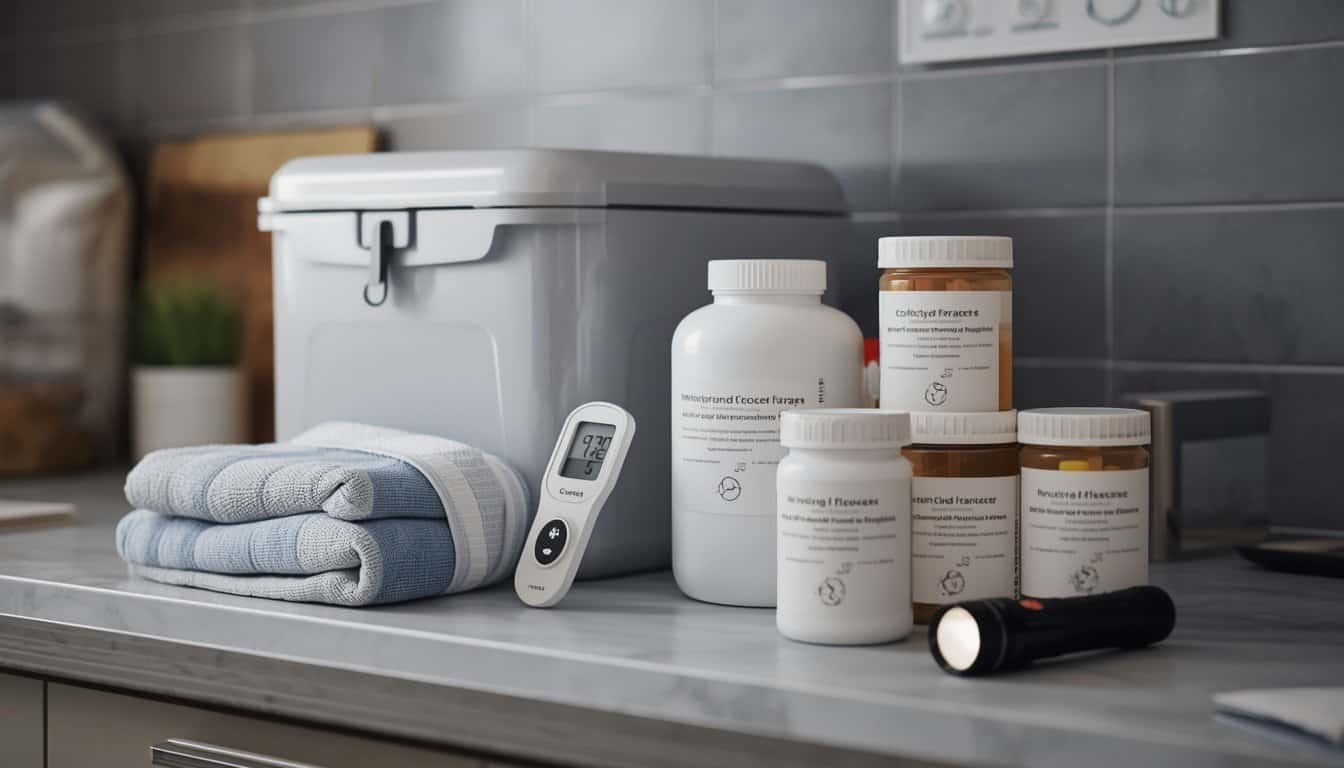
Refrigerated medication storage becomes harder to judge during a power outage because the question is not simply whether the refrigerator still feels cool. The safer question is whether the specific medication stayed within the storage conditions on its label, and whether a pharmacist or manufacturer should be contacted before the medicine is used.
Many refrigerated medications are intended to stay within a controlled cold range, often around typical refrigerator temperatures, but the exact range and allowable time outside refrigeration depend on the product. During an outage, keep the refrigerator or cooler closed as much as possible, track time and temperature, prevent freezing, and get professional guidance when storage conditions are uncertain.
Why Temperature Ranges Matter for Refrigerated Medications
Temperature-sensitive medications can lose strength or stability when they are exposed to conditions outside their labeled storage range. That may happen if a refrigerator warms for too long, if a cooler is packed incorrectly, or if the medication freezes against an ice pack. The medication may still look normal even when its strength has been affected.
This is why refrigerated medication planning should focus on three facts: the required storage range, how long the medicine may have been outside that range, and whether the medicine is essential before a replacement is available. A household cannot always answer those questions perfectly during an outage, but better notes and better temperature control make the follow-up conversation with a pharmacist much more useful.
If you need a broader step-by-step plan for cooling supplies, cooler setup, and first actions during an outage, start with How to Keep Medications Cold During a Power Outage. This article focuses more narrowly on temperature ranges, safe storage decisions, and what to document.
Check the Label Before You Rely on General Rules
The safest storage instructions are the ones attached to the medication itself. Look at the prescription label, medication guide, package insert, pharmacy handout, manufacturer website, or instructions from the pharmacist. Some medications must remain refrigerated until use, some have limited room-temperature windows, and some have different instructions after opening.
Do not assume that every refrigerated medication follows the same rule as insulin, vaccines, biologics, antibiotic liquids, or specialty injections. Even medications within the same broad category can have different storage requirements. A general outage checklist can help you respond quickly, but product-specific instructions determine the safety decision.
Before storm season, make a medication storage list. Include the medication name, whether it must be refrigerated, the storage range listed on the label, the date it was opened if that matters, the pharmacy phone number, and what the pharmacist told you to do if the refrigerator warms. Keep this list with your household emergency supplies so another caregiver can find it quickly.
Common Cold Storage Range: Know What It Means
Many refrigerated medicines are stored at ordinary refrigerator temperatures, often described around 36°F to 46°F, or 2°C to 8°C. This range is common, but it is not a universal rule for every medication. The label or pharmacist should always be treated as the authority for the specific product in your home.
A refrigerator that briefly rises above the usual cold range does not automatically tell you what to do with a medication. The decision depends on the product, the temperature reached, the length of exposure, whether the medicine froze, and whether it is still needed before a replacement can be obtained. That is why time and temperature notes matter so much.
Use a refrigerator thermometer or small cooler thermometer if you have one. Without a thermometer, you may still be able to document the outage start time, how often the door was opened, when the medication was moved, and whether it was exposed to heat, sunlight, or direct ice. Those details are better than guessing later.
Freezing Can Be as Serious as Warming
During an outage, many people worry only about keeping medication cold enough. That can lead to a different mistake: placing medication directly against frozen gel packs or loose ice. For some refrigerated medicines, freezing can damage the product and make it less effective or unsafe to rely on.
Use a barrier between medication and frozen packs unless the medication instructions specifically say otherwise. A towel, cardboard divider, sealed plastic container, or separate pouch can reduce the risk of direct freezing contact. Keep medication in its original packaging when possible to protect it from water, light, and confusion.
If a medication appears frozen, has been against ice for a long period, or looks unusual after thawing, contact a pharmacist before using it. Do not try to “fix” a frozen medication by warming it quickly, placing it in hot water, or leaving it in direct sunlight.
What to Track During the Outage
The most useful record is simple and time-based. Write down when the power went out, when the refrigerator was first opened, when the medication was moved to a cooler, what the thermometer showed if one was available, and when power returned. Also note whether the medication was exposed to direct ice, water, sunlight, heat, or freezing temperatures.
Do not rely on memory after a stressful outage. A small paper log, phone note, or printed emergency form can help you answer the pharmacist’s most important questions. If several people are helping, a written log prevents one person from assuming the medicine was kept cold while another person remembers that the cooler was opened repeatedly.
This record is especially important when the household also has powered medical equipment, mobility needs, or caregiver coordination issues. Your medication plan should connect with Backup Power for Medical Devices at Home so medicine storage, device charging, backup batteries, communication, and escalation are handled as one safety plan.
How to Use the Refrigerator, Cooler, and Backup Location
At the start of an outage, keeping the refrigerator closed is usually the simplest way to slow warming. Do not open it repeatedly to check. If you have a thermometer inside, read it only when necessary and close the door quickly. If the outage is expected to be short, unnecessary movement may create more risk than leaving the medication in the refrigerator.
If the outage continues or the refrigerator temperature rises, move the medication to a prepared insulated cooler. Use sealed cold packs or ice in bags, protect the medication from direct contact, and keep the cooler in a cool interior location away from windows, heaters, fireplaces, cars, garages, porches, and direct sun. A cooler left in a hot room or vehicle can warm quickly.
For longer outages, identify a backup location before the storm. This could be a family member’s home with power, a pharmacy plan, a community cooling or charging location, or another safe site recommended by local emergency management. A 72-Hour Emergency Kit for Power Outages should include the cooler, thermometer, pharmacy contacts, cold packs, and storage notes needed to act quickly.
When Medication May Need Replacement
Medication may need replacement when it has been outside its required range for too long, exposed to heat, frozen, contaminated by water, or stored under unknown conditions. The exact decision depends on the medication. A pharmacist, prescriber, or manufacturer can help determine whether replacement is necessary or whether there is a label-approved window for continued use.
For some refrigerated drugs, public health guidance is especially cautious after long outages. If power has been out for a day or more, refrigerated medication may need to be discarded unless the label says otherwise. If a life depends on the medication and no replacement is immediately available, professional guidance should be sought as soon as possible and replacement should happen quickly.
Do not use appearance alone to decide. Some medicines lose potency without changing color, smell, or texture. On the other hand, some products have specific label instructions that allow limited time outside refrigeration. The safe decision comes from the product information and a qualified professional, not from how the container looks.
Plan for Refills, Replacement, and Transportation
Medication storage planning should include how you would replace the medication if it becomes questionable. Keep pharmacy phone numbers, prescriber contact information, insurance details, and medication names somewhere accessible. If you use mail-order medications or specialty pharmacy shipments, ask ahead of time how weather disruptions, heat exposure, or power outages are handled.
Transportation matters too. If the medication is essential, the household should know whether someone can safely reach a pharmacy, whether the pharmacy has an emergency refill process, and whether another location can store the medication. Do not wait until the refrigerator has warmed and roads are blocked before deciding who can help.
For outages that may last several days, include refrigerated medications in your larger 7-Day Power Outage Plan. Medication storage, backup cooling, ice access, transportation, power sources, and relocation decisions all become harder when they are handled separately.
What Not to Do With Refrigerated Medications
Do not place refrigerated medications in a hot car, on a windowsill, in a garage, on a porch, near a fireplace, or next to a space heater. Do not bury them directly in ice or let labels and packaging become soaked. Do not repeatedly move them between the refrigerator and cooler without a reason, because frequent handling can create more temperature swings.
Do not assume that a refrigerator is safe just because power has returned. If the refrigerator warmed during the outage, power restoration does not undo the temperature exposure that already happened. Document what occurred and ask a pharmacist if the medication’s safe-use status is unclear.
Do not delay calling for help when a medication is essential. If the medicine is needed to sustain health and storage conditions are uncertain, contact a pharmacist, prescriber, emergency line, or local assistance resource early. A safe plan should create time to replace or relocate, not encourage waiting until there are no options.
FAQ
What temperature should refrigerated medications be kept at?
Many refrigerated medicines are stored around normal refrigerator temperatures, often 36°F to 46°F, but this is not universal. Always check the medication label, pharmacy instructions, or manufacturer guidance for the specific product.
Can refrigerated medicine still be used after a power outage?
It depends on the medication, how warm it became, how long it was out of range, and whether it froze. Contact a pharmacist or manufacturer if you are unsure, especially for essential medications.
Is it safe to put refrigerated medication directly on ice?
Usually, direct ice contact should be avoided unless the product instructions allow it. Use a towel, pouch, divider, or sealed container to keep medication cool without freezing it.
Does medication have to be thrown away if the refrigerator warmed up?
Not always, but it may need replacement depending on the product and exposure time. Do not rely on appearance alone. Follow label instructions and ask a pharmacist for product-specific guidance.
Conclusion
Refrigerated medication safety during an outage depends on the medication’s labeled storage range, the time and temperature exposure, and whether the product froze or warmed beyond acceptable limits. The safest household plan is to slow temperature changes, document what happened, and contact a pharmacist when storage conditions are uncertain.
Prepare before severe weather season by making a medication storage list, adding a thermometer and cooler supplies to your emergency kit, and asking your pharmacy what to do if the refrigerator loses power. When the medication is essential, act early so replacement, relocation, or emergency support remains possible.