


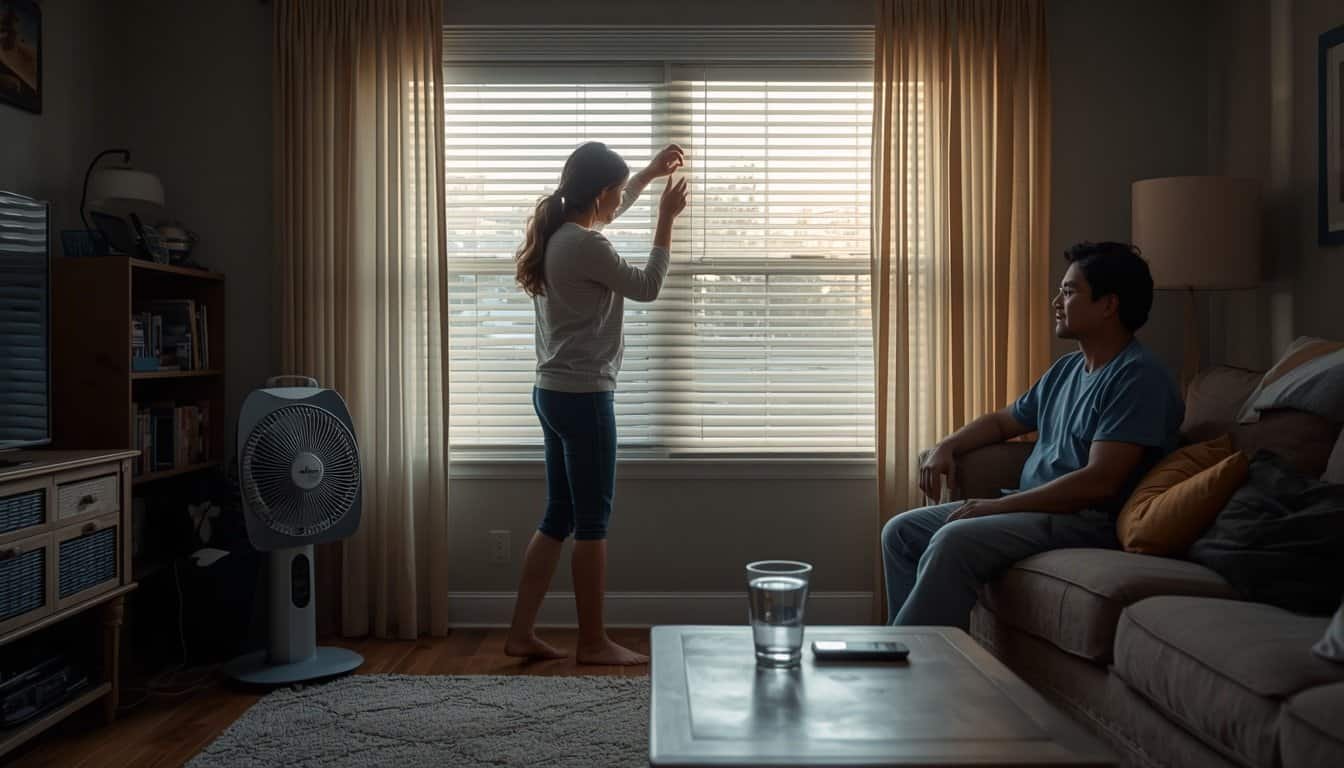
A summer power outage can make a home uncomfortable quickly, especially when the air conditioning stops, the sun is still hitting the windows, and indoor temperatures keep climbing after sunset. The safest goal is not to “tough it out,” but to slow heat gain, cool people directly, protect vulnerable household members, and decide early when the home is no longer safe.
To keep your house cool during a power outage without AC, block sunlight, close off the hottest rooms, reduce indoor heat sources, use battery fans only when conditions are still safe, drink water, cool skin with damp cloths or showers, and move to a cooler location if heat becomes dangerous. Fans and shade can help with comfort, but they are not a substitute for air conditioning during extreme heat.
Start by Keeping Heat Out
The first step is to slow the heat entering the house. Close blinds, curtains, and shades on sun-facing windows. If you have reflective window coverings, insulated curtains, or temporary window reflectors, use them on the side of the home taking the strongest sun. The less heat that enters during the day, the easier it is to keep people comfortable later.
Close windows during the hottest part of the day if the outdoor air is hotter than the indoor air. Opening windows at noon may feel like “doing something,” but it can pull more heat into the home. In many summer outages, the better move is to keep hot outside air out during the day, then ventilate later if outdoor temperatures drop enough to help.
This strategy fits naturally with broader summer outage planning. If you have not already built a heat-specific plan, review Heat Wave + Power Outage Planning so cooling, hydration, medical needs, and relocation decisions are not left until the house is already overheated.
Close Off the Hottest Rooms
Not every room heats at the same speed. Rooms with direct sun, poor insulation, dark roofing above them, large west-facing windows, or upstairs exposure may become uncomfortable much sooner than shaded rooms on lower floors. During an outage, treat the home like a set of zones instead of trying to use every space.
Choose the coolest room or area as the household cooling zone. This is often a shaded first-floor room, basement room that is dry and safe, or interior room away from direct sunlight. Keep doors closed to hotter rooms when possible so heat does not spread as quickly into the space where people are resting.
Bring essentials into that cooling zone: water, medications, phone chargers, flashlights, battery fans, pet supplies, and a place to sit or lie down. This avoids repeated trips through hotter areas and helps older adults, children, pets, or people with mobility limits stay in the safest part of the home.
Use Fans Carefully, Not Blindly
Battery-powered fans, rechargeable fans, and power-station-supported fans can improve comfort by moving air across the skin. They are most useful when indoor temperatures are warm but not dangerously hot, when people are hydrated, and when the airflow helps sweat evaporate.
Fans have limits during extreme heat. If indoor temperatures are very high, moving hot air across the body may not prevent heat-related illness and can sometimes make the body work harder. Fans should be treated as a comfort and cooling-support tool, not proof that the home is safe.
Use fans to cool people, not empty rooms. Aim airflow toward occupied areas, keep the fan close enough to be useful, and turn it off when no one is using the space. If battery supply is limited, save fan power for the hottest part of the day, sleep periods, or vulnerable household members.
Cool the Person, Not Just the Room
When the AC is out, direct body cooling can matter more than trying to cool the whole house. Use cool damp cloths on the neck, wrists, face, and arms. Take a cool shower or bath if water service is working and it is safe to do so. Sit with feet in cool water if that is practical and safe for the person.
Wear loose, lightweight clothing and avoid unnecessary activity during the hottest hours. Cooking, cleaning, moving furniture, or repeatedly going outside can raise body temperature and make the home feel worse. Save any essential tasks for early morning or later evening if conditions improve.
Hydration matters, but it should be practical and medically appropriate. Keep water nearby and encourage regular drinking before people feel very thirsty. People with fluid restrictions, kidney disease, heart failure, or other medical conditions should follow their healthcare provider’s guidance rather than forcing large amounts of water.
Reduce Heat Sources Inside the Home
During a summer outage, every unnecessary heat source works against you. Avoid using ovens, stovetops, indoor grills, candles, fireplaces, or fuel-burning equipment inside the home. Even when the main concern is heat, carbon monoxide and fire risks still matter.
Use shelf-stable foods, no-cook meals, or safe outdoor cooking methods if needed. If you use a grill, camp stove, or propane burner, keep it outdoors and away from windows, doors, garages, porches, and enclosed spaces. Do not bring outdoor cooking equipment inside because the house is dark or the weather is uncomfortable.
Also reduce indoor electronics use where possible. Large screens, computers, and unnecessary devices add small amounts of heat and drain backup batteries that may be needed for phones, medical-alert devices, fans, or communication tools.
Protect Phones, Alerts, and Communication
Cooling decisions are safer when the household can receive alerts and ask for help. Keep phones charged, use low-power mode, and avoid draining batteries on nonessential entertainment. If someone depends on a medical-alert device, caregiver text chain, or communication aid, that device should stay ahead of convenience electronics.
Store charging cords and backup batteries in the cooling zone so they are easy to find. If the outage continues, charge devices in batches and keep at least one phone available for emergency calls, weather alerts, utility updates, and check-ins.
For a more complete setup, use Backup Charging Plan for Phones and Medical Alerts. A cooling plan is much stronger when communication does not fail at the same time the house is getting hotter.
Check on High-Risk People Early
Some people are more vulnerable during heat-related outages. Older adults, infants, young children, pregnant people, people with chronic medical conditions, people taking certain medications, people with mobility limits, and people living alone may need earlier support than healthy adults in the same home.
Do not wait for someone to ask for help. Check on high-risk household members, neighbors, and relatives early in the outage. Ask specific questions: Are you drinking water? Is the room getting hotter? Is your phone charged? Can you leave if needed? Do you have a cooler place to go?
If an older adult is part of the household or lives nearby, connect this plan with Emergency Preparedness for Seniors. Heat, power, mobility, communication, medications, and transportation should be planned together instead of handled as separate problems.
Know the Signs That the House Is No Longer Safe
The most important cooling decision is knowing when to leave. A home can become unsafe even if people are still coping. Warning signs include indoor heat that keeps rising, poor sleep from heat, dizziness, weakness, confusion, nausea, headache, heavy sweating that suddenly changes, hot dry skin, fainting, or someone who cannot cool down after rest, water, and direct cooling steps.
Medical devices, refrigerated medications, mobility limits, and communication failure can all lower the threshold for leaving. If someone depends on powered medical equipment, has limited mobility, or cannot safely communicate if symptoms worsen, the household should act earlier than it would for a low-risk adult.
Identify cooler destinations before the outage: a relative’s home, public library, cooling center, community shelter, hotel, workplace, or other powered location. If the person has medical needs, confirm transportation and what supplies must travel with them. Your 7-Day Power Outage Plan should include this relocation decision before the next heat event.
Use a Generator Only for the Right Jobs
A generator can help during a long summer outage, but it is not an indoor cooling device. It must be used outdoors and away from windows, doors, garages, vents, and enclosed spaces. Never run a generator inside the home or near openings because carbon monoxide can build up quickly and become deadly.
If you have a properly planned generator setup, choose priorities carefully. A refrigerator, a small fan, phone charging, a medical device, or a limited window AC unit may matter more than entertainment or convenience loads. Do not overload the generator trying to restore normal life all at once.
If the only way to stay cool would require unsafe generator placement, overloaded cords, or improvising with equipment you do not understand, relocation may be safer. Generator planning should be done before the outage, not during the hottest part of the day.
Prepare Before the Next Heat Outage
The best time to make a no-AC cooling plan is before the heat index climbs and storms are in the forecast. Add blackout curtains or shades where sun is strongest, freeze water bottles when storms are predicted, charge fans and power banks, identify the coolest room, and keep a written list of cooling centers or safe destinations.
Build a small heat-outage kit with water, electrolyte drinks if appropriate, battery fans, cooling towels, flashlights, charging cords, power banks, medications, pet water bowls, and emergency contacts. Keep it where people can reach it without searching through hot rooms.
Use the Power Outage Preparedness Checklist as a supplemental planning tool to make sure cooling, lighting, charging, food, water, medications, and communication are ready before the next storm knocks out power.
FAQ
How can I cool a room during a power outage without AC?
Block sunlight, close off hot rooms, use the coolest lower-level space, limit door openings, reduce indoor heat sources, and use battery fans to cool people directly. If the room stays dangerously hot, move to a cooler location.
Should I open windows during a summer power outage?
Open windows only when outdoor air is cooler than indoor air and it is safe to do so. During the hottest part of the day, open windows may bring more heat into the home.
Are battery fans safe during extreme heat?
Battery fans can improve comfort, but they may not prevent heat-related illness during very hot indoor conditions. Use fans with hydration, shade, direct body cooling, and early relocation when needed.
When should I leave home during a heat-related power outage?
Leave or seek help if the home remains dangerously hot, someone shows signs of heat illness, medical equipment or medication safety is at risk, communication devices are failing, or vulnerable household members cannot cool down.
Conclusion
Keeping a house cool during a power outage without AC is about slowing heat gain and protecting people directly. Block sun, close off hot rooms, use the coolest area, reduce indoor heat sources, conserve battery power, and cool skin with water, cloths, and rest.
The most important part of the plan is knowing when the home is no longer safe. Fans, curtains, and cool showers can help for a while, but extreme heat deserves early decisions, especially for older adults, medical needs, children, pets, and anyone who cannot safely communicate or relocate on their own.