


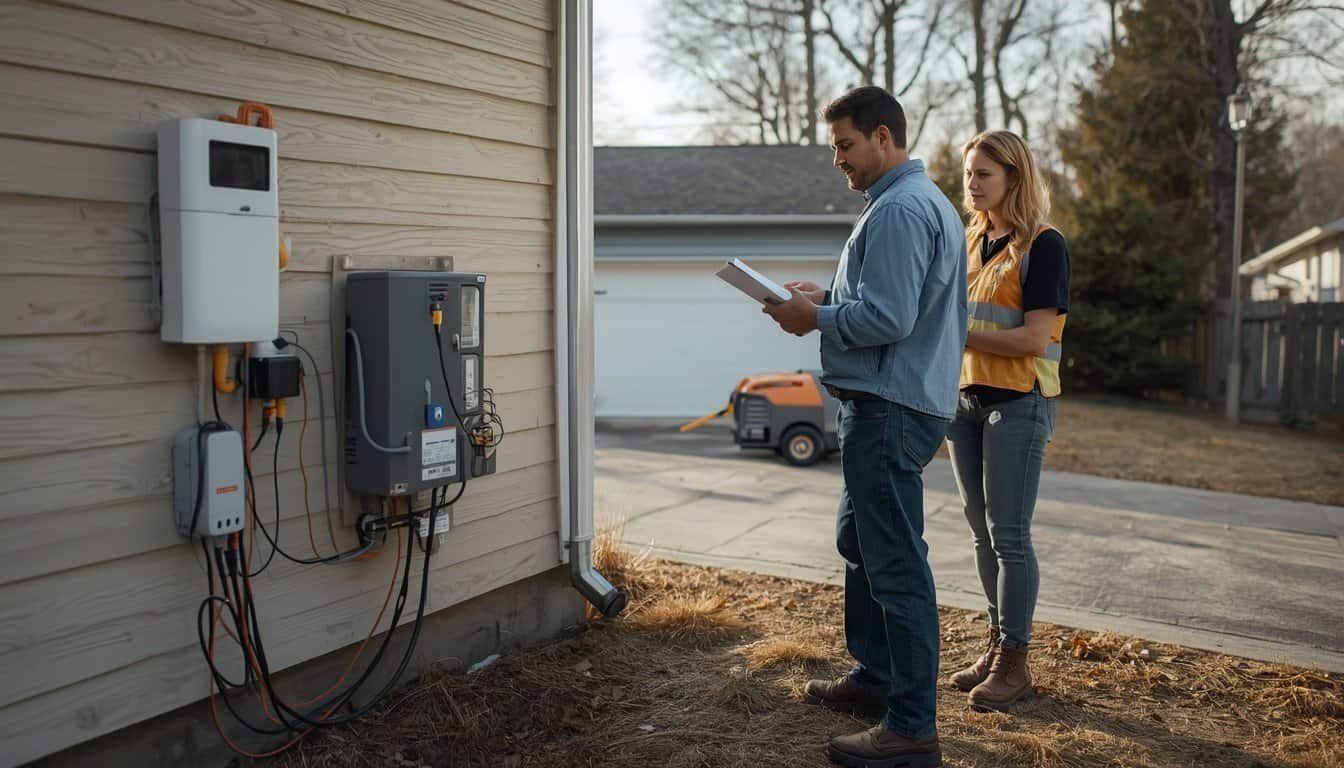
Floating neutral and bonded neutral are two generator terms that sound technical because they are technical. The trouble is that homeowners often discover them at the worst possible time: the generator starts, the cord is connected, the transfer switch is ready, and then a GFCI trips or the house connection does not behave as expected.
A floating neutral generator keeps the neutral conductor isolated from the generator frame, while a bonded neutral generator connects neutral to the generator frame. Neither term automatically means “good” or “bad.” The right setup depends on how the generator is being used, whether it is powering cord-connected loads or a home transfer system, and whether the transfer equipment is designed for that generator.
What “Neutral” Means in Plain English
In a typical 120-volt circuit, the hot conductor carries power to the load, and the neutral conductor completes the normal return path. The equipment grounding conductor is different. It is there for fault protection and bonding of metal parts, not as the normal current path.
That distinction matters because generator problems often begin when neutral and ground are treated as interchangeable. They are connected together at specific points in an electrical system for safety reasons, but they should not be randomly tied together in multiple places by cords, adapters, or improvised generator connections.
When a generator is used by itself with extension cords, the generator may be treated differently than when it is connected to a building through a transfer switch or inlet. That is why the same generator can seem simple on a jobsite but confusing when someone tries to use it for home backup power.
What a Floating Neutral Generator Means
A floating neutral generator has the neutral conductor isolated from the generator frame. In plain terms, the neutral is not bonded to the metal frame of the generator. Some portable inverter generators and home-backup-friendly models use this configuration, especially when they are intended to connect through certain transfer equipment.
A floating neutral is not a loose wire or a missing safety feature by itself. It describes where the neutral-to-ground bond is not located. In many home backup setups, the main service equipment already has the neutral-ground bond, so transfer equipment and generator configuration must be matched correctly.
The important point for homeowners is that floating neutral status should be verified from the owner’s manual, manufacturer documentation, or a qualified electrician. Do not rely only on online comments, plug-in testers, or assumptions based on brand or generator size.
What a Bonded Neutral Generator Means
A bonded neutral generator has the neutral connected to the generator frame. That can be appropriate when the generator is used as a separately derived source for cord-and-plug equipment, jobsite use, or certain GFCI-protected generator designs. Many generators are shipped this way, especially models built for worksite protection.
Bonded neutral does not automatically make a generator unsafe. The issue is compatibility. A bonded neutral generator connected to transfer equipment that does not switch the neutral can create confusion, nuisance tripping, objectionable current paths, or unsafe assumptions if the setup is not designed for it.
If your generator manual says the neutral is bonded to frame, treat that as important installation information. The transfer equipment must be compatible with that configuration, or a qualified electrician should evaluate the correct solution.
Why GFCI Trips Get Confusing
GFCI protection watches for current imbalance between the conductors it monitors. When current leaves on one path but returns in a way the GFCI does not expect, the device may trip. That is exactly what GFCI protection is designed to do in many fault conditions.
Generator GFCI trips become confusing when the generator, neutral bond, transfer switch, and home panel do not match the way the system expects. A bonded neutral generator connected to equipment that does not switch the neutral may cause GFCI protection to see a return-path problem, even though the homeowner only sees “the generator keeps tripping.”
Do not defeat GFCI protection to make the problem go away. A GFCI trip is information. The right next step is to understand whether the generator and transfer equipment are compatible, not to bypass the safety feature.
Why Transfer Switches Change the Question
A generator connected to a house is not the same as a generator powering one appliance through a cord. Once the generator connects to a building through an inlet, transfer switch, interlock, or selected-circuit panel, the home’s wiring system becomes part of the generator setup.
Some transfer equipment switches only the ungrounded conductors. Other transfer equipment also switches the neutral. Which design is correct depends on the generator configuration, electrical code requirements, the installed system, and the manufacturer instructions. This is where neutral bonding confusion becomes more than a vocabulary problem.
If the generator runs but the transfer setup trips, fails, or behaves strangely, do not start moving wires. Use Generator Runs but House Has No Power for safe external checks, then contact the installer or electrician if the issue appears to involve the transfer equipment itself.
Do Not Solve the Problem With a Homemade Adapter
Neutral-bonding confusion sometimes leads people to make or buy adapters that connect neutral and ground, lift ground connections, bypass GFCI protection, or change how a plug behaves. That is not safe troubleshooting. An adapter that makes a trip stop may also defeat a protection layer or create a dangerous current path.
Do not use a “bonding plug,” modified cord, cheater adapter, dryer-outlet workaround, or homemade connector to force a generator and home system to cooperate. If a generator cannot work with the installed transfer equipment as intended, the answer is a proper compatibility review, not an improvised plug.
This connects directly to backfeeding risk. If you are tempted to use a wall outlet, dryer outlet, or unapproved connection because the transfer setup is confusing, stop and review Backfeeding Symptoms Homeowners Miss. The wrong connection can energize wiring in ways that endanger people and equipment.
How to Check Your Generator Type Safely
The safest first check is the generator manual. Look for phrases such as floating neutral, neutral bonded to frame, bonded neutral, neutral ground bond, or transfer switch compatibility. Some specification sheets also list whether the neutral is bonded to ground.
Do not assume all generators from the same brand are configured the same way. A small inverter generator, a contractor-style generator, and a larger dual-fuel generator may have different neutral bonding and GFCI designs. Even two models that look similar can be different internally.
A qualified electrician can also verify how the generator is configured and whether the transfer equipment is appropriate. This is especially important before storm season, when there is time to solve the problem calmly instead of during an outage.
What Not to Test During an Outage
Do not test neutral bonding by opening generator panels, removing screws, disconnecting internal wires, probing transfer switch terminals, or changing house-panel wiring during an outage. These actions can expose live parts, damage equipment, violate instructions, or create dangerous conditions.
Also avoid repeated live testing with appliances connected. If the generator trips every time it connects to the house, repeated resetting is not a diagnostic plan. It is a warning that the connection path needs to be understood.
If you need a broader triage route, start with Generator Problems Explained. But if the issue involves neutral bonding, GFCI trips at transfer connection, or house wiring behavior, the next step is usually qualified evaluation.
When GFCI Trips May Not Mean the Generator Is Broken
A generator that trips GFCI protection when connected to a house may not be broken. It may be doing exactly what its protection system is designed to do when it sees an unexpected current path. The problem may be that the generator type and transfer equipment type are not matched.
This is why replacing the generator, replacing the cord, or blaming one appliance may not solve the issue. If the trip happens at the moment the generator is connected to the transfer system, the cause may be in the neutral-bonding relationship rather than the load itself.
The safest interpretation is: the system is telling you something is not right for that connection. Stop, document the generator model and transfer equipment, and have the compatibility checked.
When a GFCI Trip May Point to a Real Fault
Not every GFCI trip is a neutral-bonding mismatch. A trip can also happen because of damaged cords, water, a faulty appliance, moisture in a connection, damaged insulation, or an actual ground fault. During storm outages, those causes are common because equipment may be wet, cords may be stretched outdoors, and appliances may be running under unusual conditions.
If the GFCI trips only when one appliance is connected, focus on that appliance, cord, or outlet path. If it trips only in wet weather, moisture may be involved. If it trips when connected to the transfer equipment with no meaningful load, compatibility becomes more suspicious.
Do not treat all trips the same. The timing and conditions matter. But do treat every trip as a reason to stop and understand the cause before continuing.
Why This Is Not a DIY Code Shortcut
Neutral bonding touches electrical-code concepts, equipment listing, transfer-switch design, grounding, GFCI protection, and service-panel bonding. Those are not small homeowner preferences. They are part of how the electrical system controls fault current and separates generator power from utility power.
That is why the answer is not always “bonded is better” or “floating is better.” A generator used one way may need one configuration, while a generator used with different transfer equipment may need another. The correct setup is the one supported by the generator manufacturer, transfer equipment manufacturer, local code, and qualified installation.
If you are buying a generator for home backup, choose the generator and transfer equipment together. Do not buy one first and hope the other will match later.
When to Stop Using the Setup
Stop using the generator setup if GFCI protection trips repeatedly, the generator breaker trips when connected to the house, the transfer switch behaves unexpectedly, cords or plugs heat up, electronics behave strangely, breakers will not reset, or you are unsure whether the neutral is bonded or floating for your installed system.
Also stop if anyone suggests bypassing GFCI protection, lifting a ground, modifying the neutral bond, using a dryer outlet, or making an adapter to force the setup to work. Those are not normal troubleshooting steps for a homeowner during an outage.
Use When to Stop Using a Generator as the broader shutdown guide. Neutral-bonding confusion belongs in the stop-and-check category because the wrong fix can create shock, fire, backfeeding, or equipment-damage risks.
How to Plan Before the Next Storm
The best time to solve neutral-bonding confusion is before the next outage. Find the generator manual, confirm whether the neutral is floating or bonded, identify whether your transfer equipment switches the neutral, and ask the installer or electrician whether the setup is compatible.
Keep that information with the generator paperwork. Include the generator model, transfer-switch model, electrician contact, startup sequence, shutdown sequence, and any notes about GFCI behavior. A clear one-page instruction sheet can prevent dangerous guessing when the lights are out.
If you plan to replace either the generator or transfer equipment, do not evaluate them separately. Ask specifically whether the new generator’s neutral configuration and GFCI protection are compatible with the home connection method.
FAQ
What is the difference between a floating neutral and bonded neutral generator?
A floating neutral generator keeps neutral isolated from the generator frame. A bonded neutral generator connects neutral to the generator frame. Which one is appropriate depends on how the generator is used and what transfer equipment it connects to.
Why does my generator GFCI trip when connected to my house?
It may be a real ground fault, moisture problem, damaged cord, faulty load, or a mismatch between a bonded-neutral generator and transfer equipment that does not switch the neutral. Stop and have the setup checked instead of bypassing protection.
Can I remove the neutral bond from my generator?
Do not remove or change the neutral bond unless the generator manual, transfer equipment instructions, and a qualified electrician support that change. Changing bonding can affect safety, code compliance, and GFCI behavior.
Do I need a transfer switch that switches neutral?
It depends on the generator configuration and the transfer equipment design. Some setups require neutral switching, while others do not. A qualified electrician should confirm compatibility before the generator is used for home backup.
Conclusion
Floating neutral and bonded neutral generator issues are confusing because the right answer depends on the whole setup, not just the generator. A floating neutral is not automatically safer, and a bonded neutral is not automatically wrong. The generator, GFCI protection, transfer equipment, and home electrical system must be compatible.
If GFCI protection trips, the transfer switch behaves strangely, or someone suggests changing neutral or ground connections to make the generator work, stop. Use the manuals, document the equipment, and get qualified help before relying on that setup during an outage. The goal is not just to get power into the house; it is to do it without defeating the safety system that protects people and equipment.