


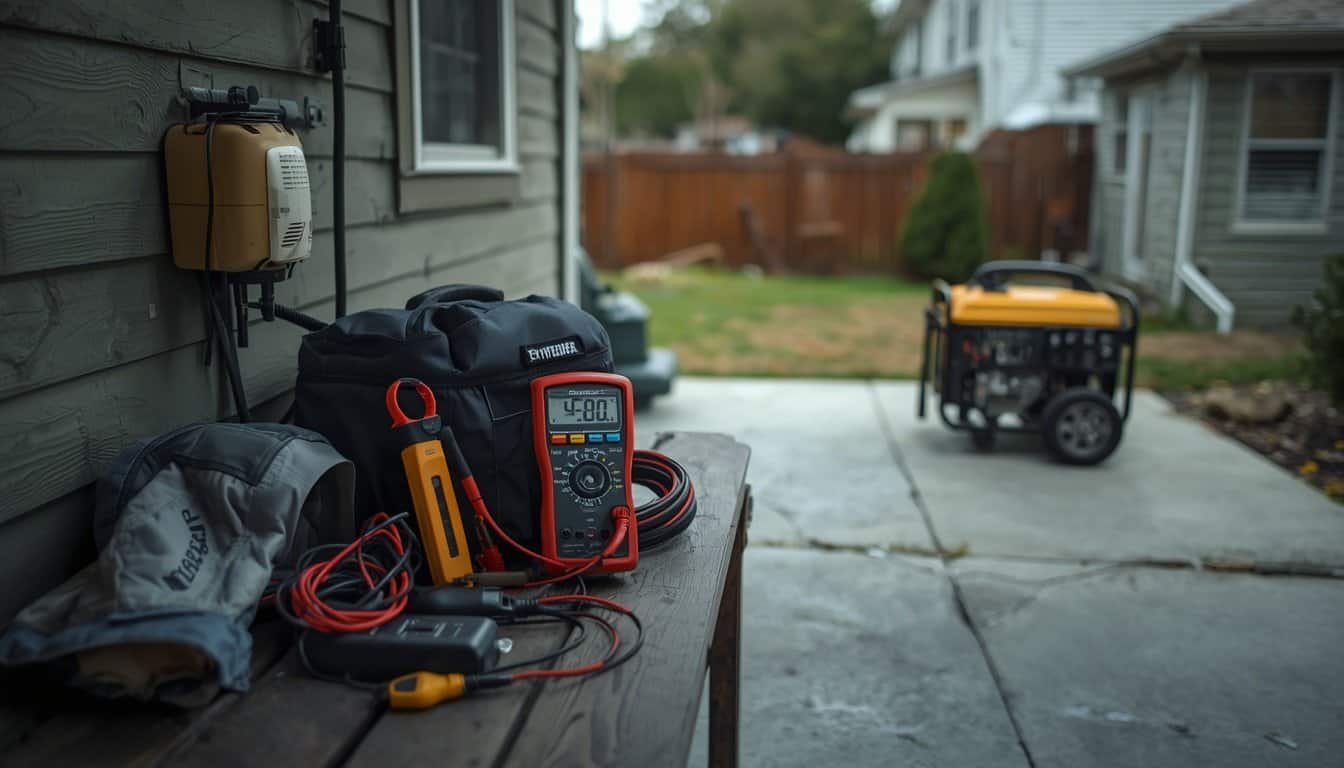
Generator troubleshooting tools can help you understand what is happening during an outage, but they can also create a false sense of confidence. A carbon monoxide alarm, flashlight, watt meter, outlet tester, multimeter, and heavy-duty cords are useful only when they are used within safe limits. Some generator problems should not be tested by a homeowner at all.
The safest generator troubleshooting kit starts with tools that protect people first: carbon monoxide alarms, flashlights, dry gloves, correctly rated cords, and a simple way to track loads. More advanced tools, such as multimeters and clamp meters, can help in trained hands, but they should not be used to probe live panels, internal generator parts, wet cords, transfer switches, or anything you do not understand.
Start With Safety Tools, Not Test Gear
The most important generator troubleshooting tools are not the ones that measure voltage. They are the ones that help prevent the worst hazards: carbon monoxide alarms, flashlights, dry footing, safe generator placement, and a way to keep people away from cords, fuel, and hot equipment.
A portable generator should be outdoors, far from windows, doors, vents, garages, porches, and enclosed spaces before any troubleshooting begins. A multimeter cannot protect the household from carbon monoxide if the generator is in the wrong place. A watt meter cannot make a wet cord safe. A flashlight cannot make it acceptable to open a panel you are not qualified to inspect.
If you need a broader symptom-by-symptom route, start with Generator Problems Explained. This article focuses on which tools help, what they can tell you, and where a homeowner should stop.
Carbon Monoxide Alarms Are Essential
Carbon monoxide alarms are not troubleshooting accessories. They are life-safety devices. A generator can produce dangerous carbon monoxide even when it sounds normal, runs smoothly, and appears to be far enough away. Exhaust can drift with wind, collect near openings, or enter the home through windows, doors, vents, garages, or attached spaces.
Use battery-powered carbon monoxide alarms or alarms with battery backup on each level of the home and near sleeping areas. Test them before storm season and replace batteries or expired alarms according to the manufacturer’s instructions. If an alarm sounds while a generator is running, leave the area and follow emergency instructions. Do not silence the alarm and continue using the generator.
CO alarms are a backup warning, not permission to use poor generator placement. The first rule is still outdoor-only placement away from the home. If placement is questionable, stop using the generator instead of relying on the alarm to catch the mistake.
A Flashlight Is a Troubleshooting Tool
Many generator mistakes happen because people are working in the dark. A good flashlight or headlamp helps you see cord damage, wet ground, fuel spills, hot plug discoloration, tripped breakers, loose connections, and blocked generator ventilation before you touch anything.
Use lighting before action. Look at the generator, cord path, appliance connection, fuel area, and ground conditions from a safe position. If you cannot see the setup clearly, do not start unplugging, resetting, refueling, or moving equipment.
A flashlight is also safer than candles around fuel and extension cords. Keep one near the generator instructions and another near the home entrance or transfer equipment area so you are not searching for light after the outage begins.
Heavy-Duty Cords Are Part of the Tool Kit
An extension cord is not just a connector. It is part of the generator system. A long, thin, indoor-rated, damaged, or overloaded cord can create voltage drop, overheating, weak appliance performance, and fire risk. Many generator “problems” are really cord problems.
Use outdoor-rated, grounded, heavy-duty extension cords sized for the load and distance. Keep cords as short as practical while still keeping the generator safely outdoors. Do not run cords through standing water, under rugs, through door pinch points, or across walking paths where people may trip in low light.
If you are unsure whether a cord is appropriate, review Extension Cord Sizing for Generators. A cord that is too small can make a refrigerator, pump, or fan act weak even when the generator itself has enough capacity.
A Watt Meter Helps With Load Awareness
A plug-in watt meter can help you understand how much power some cord-connected appliances use. It can be useful before storm season for learning the running watts of a refrigerator, freezer, fan, charger, or small appliance. That information can make generator load planning more realistic.
The best time to use a watt meter is before an emergency, not during a wet, dark, stressful outage. Test ordinary plug-in loads under normal conditions, write down the results, and use those numbers to create a load rotation plan. Do not use a watt meter on hardwired equipment, wet cords, damaged outlets, or appliances that exceed the meter’s rating.
The Circuit Load Calculator can also help with basic load awareness, but remember that a household circuit and a portable generator are not the same thing. Use tools for planning, then follow the generator manual, cord ratings, appliance startup demand, and transfer equipment limits.
A Multimeter Can Help, But It Has Limits
A multimeter can measure voltage, continuity, and other electrical values, depending on the model and how it is used. In trained hands, it can help confirm whether a generator outlet is producing expected voltage or whether a simple cord or outlet condition needs attention.
In untrained hands, a multimeter can create risk. The wrong meter setting, wrong probe placement, wet conditions, damaged probes, or testing at a live panel can cause shock, sparks, meter damage, or worse. A multimeter is not a magic safety device. It is a live electrical testing tool.
Use a multimeter only if you already know how to use it safely, understand the voltage you expect, and are testing from a dry, stable, accessible location. Do not use an outage as your first lesson in live electrical testing. If voltage readings are abnormal or electronics behave strangely, review Generator AVR Problems Explained before assuming the issue is safe to keep testing.
Do Not Probe Transfer Switches or Panels
Transfer switches, interlocks, inlet boxes, and electrical panels are not the place for casual testing. If the generator runs but house circuits do not behave as expected, the issue may involve the inlet, transfer equipment, selected circuits, breakers, neutral configuration, or wiring. That is electrician territory, not trial-and-error territory.
Do not remove panel covers, probe transfer-switch terminals, bypass interlocks, alter cords, use a dryer outlet, or connect a generator to a wall outlet. If the installed system does not work as expected, stop and contact the installer or a qualified electrician.
This is especially important if the symptom involves possible backfeeding, partial house power, repeated breaker trips, or confusion about floating neutral and bonded neutral generator behavior. Tools should help you stop safely, not encourage you to go deeper into equipment you do not understand.
An Outlet Tester Can Be Useful, But Not Definitive
A simple outlet tester can sometimes identify basic outlet conditions, such as missing ground or reversed polarity, depending on the tester and the circuit. It may be useful for checking ordinary outlets under normal conditions or verifying that a known receptacle appears reasonable before noncritical use.
However, outlet testers can be misleading on generators, transfer systems, GFCI-protected circuits, floating neutral setups, or unusual wiring arrangements. A result that looks “wrong” may not tell you the full story, and a result that looks “right” does not prove the entire generator setup is safe.
Use outlet testers as simple indicators, not final authority. If the result is unexpected, stop and investigate safely. Do not defeat grounding, bonding, GFCI protection, or transfer equipment to make a tester display look better.
A Clamp Meter Is Not a Beginner Tool
A clamp meter can measure current around a conductor without cutting into the wire, but it is not a beginner tool for outage troubleshooting. It requires knowing which conductor to clamp, what current range to expect, and how to stay away from live or moving hazards.
Clamp meters can be useful for electricians, generator technicians, and experienced users building a load profile. They are not a reason for a homeowner to open panels, separate cord conductors, or work around live generator wiring during a storm.
If you do not already know how to use a clamp meter safely, leave that tool out of the outage response. A written load list, watt meter testing before the storm, and safe load rotation plan are usually more practical for a household.
A Thermometer Helps With Food and Equipment Decisions
A refrigerator or freezer thermometer may not seem like a generator troubleshooting tool, but it can reduce unnecessary generator use. If you know the refrigerator and freezer are still within safe temperature ranges, you may be able to rotate generator power more calmly instead of running the refrigerator continuously out of fear.
Temperature tracking also helps you decide whether powering the refrigerator again will help or whether food has already been unsafe for too long. A generator can cool an appliance, but it cannot undo unsafe temperature exposure that already happened.
Thermometers are simple, low-risk tools that support better generator decisions. They help you prioritize power based on actual conditions instead of repeatedly opening doors or guessing.
Work Gloves and Dry Footing Matter
Work gloves can protect your hands from rough cord jackets, hot surfaces, sharp edges, and minor handling hazards. They do not protect you from live electrical shock unless they are specifically rated and used by trained workers. Ordinary gloves are not permission to touch wet plugs, energized cords, outlets, or internal parts.
Dry footing matters just as much. Do not handle generator cords or plugs while standing in water, on soaked ground, or in a wet basement. Do not kneel near puddles to inspect a cord end. If the area is wet, stop and change the plan.
Use gloves and dry ground as part of a cautious setup, not as a substitute for safe electrical practice.
Fuel Tools Should Prevent Spills and Fire
Fuel cans, funnels, and caps are part of the safety kit. Store fuel only in approved containers, away from living spaces, ignition sources, and children. Keep fuel containers closed and stable. Do not store gasoline indoors or near appliances, pilot lights, or heat sources.
Before refueling, shut the generator down and let it cool according to the manufacturer’s instructions. Do not pour fuel into a running or hot generator. A flashlight is safer than a flame source if you need to see during refueling.
If you smell fuel, see a leak, or spill fuel near a hot engine, stop using the generator. Fuel problems belong in the stop-and-fix category, not the keep-running category.
When Not to Test at All
Some situations should end testing immediately. Do not test if the generator is indoors or too close to the home, if anyone has possible carbon monoxide symptoms, if cords are wet, if water is near outlets or panels, if a plug is hot or melting, if breakers keep tripping, if fuel is leaking, or if smoke, sparks, burning smell, shock, or tingling are present.
Also do not test by plugging in expensive electronics, bypassing transfer equipment, defeating GFCI protection, lifting a ground, modifying a cord, or opening a generator electrical cover. These are not homeowner troubleshooting steps during an outage.
If you are unsure whether a warning sign means stop, use When to Stop Using a Generator. That article is the safer route when the question is no longer “What tool should I use?” but “Should I be using this generator at all?”
Build a Simple Generator Troubleshooting Kit
A practical kit can be simple: carbon monoxide alarms, flashlight or headlamp, spare batteries, heavy-duty outdoor-rated cords, printed generator manual, load list, wattage notes, refrigerator thermometer, work gloves, fuel funnel, and emergency contacts. If you know how to use them safely, add a multimeter, outlet tester, or watt meter.
Keep the kit in a dry, accessible location near the generator supplies, not buried behind seasonal storage. The person using the generator during an outage may not be the person who organized the equipment. Make the kit obvious and boring.
After each outage, update the kit. Replace dead batteries, mark cords that got warm, remove damaged equipment, add missing instructions, and write down which loads caused problems. The best troubleshooting tool is often a clear record of what happened last time.
FAQ
What tools should I keep for generator troubleshooting?
Start with carbon monoxide alarms, flashlights, spare batteries, heavy-duty outdoor-rated cords, the generator manual, a written load list, and basic safety supplies. A watt meter, outlet tester, or multimeter can help only if you know how to use them safely.
Do I need a multimeter for a portable generator?
Not every homeowner needs one. A multimeter can help confirm voltage in trained hands, but it can be dangerous if used incorrectly. Do not use a multimeter on live panels, wet cords, internal generator parts, or equipment you do not understand.
Can I use a watt meter with a generator?
Yes, for some plug-in loads if the watt meter is rated for the appliance and used under safe, dry conditions. It is best used before storm season to learn load sizes, not during dangerous outage conditions.
When should I stop testing a generator?
Stop testing if there is carbon monoxide risk, fuel smell, smoke, sparks, shock, wet electrical equipment, hot cords, repeated breaker trips, suspected backfeeding, or any need to open electrical panels or modify wiring.
Conclusion
Generator troubleshooting tools are helpful when they keep the household safer and make decisions clearer. Carbon monoxide alarms, flashlights, correct cords, load notes, thermometers, and basic planning tools often matter more than advanced test gear during an outage.
Use multimeters, watt meters, and outlet testers only within their limits. Do not test live equipment you do not understand, do not bypass safety devices, and do not keep experimenting when warning signs appear. The best generator troubleshooting tool is good judgment: know when to check, know when to simplify, and know when to stop.