


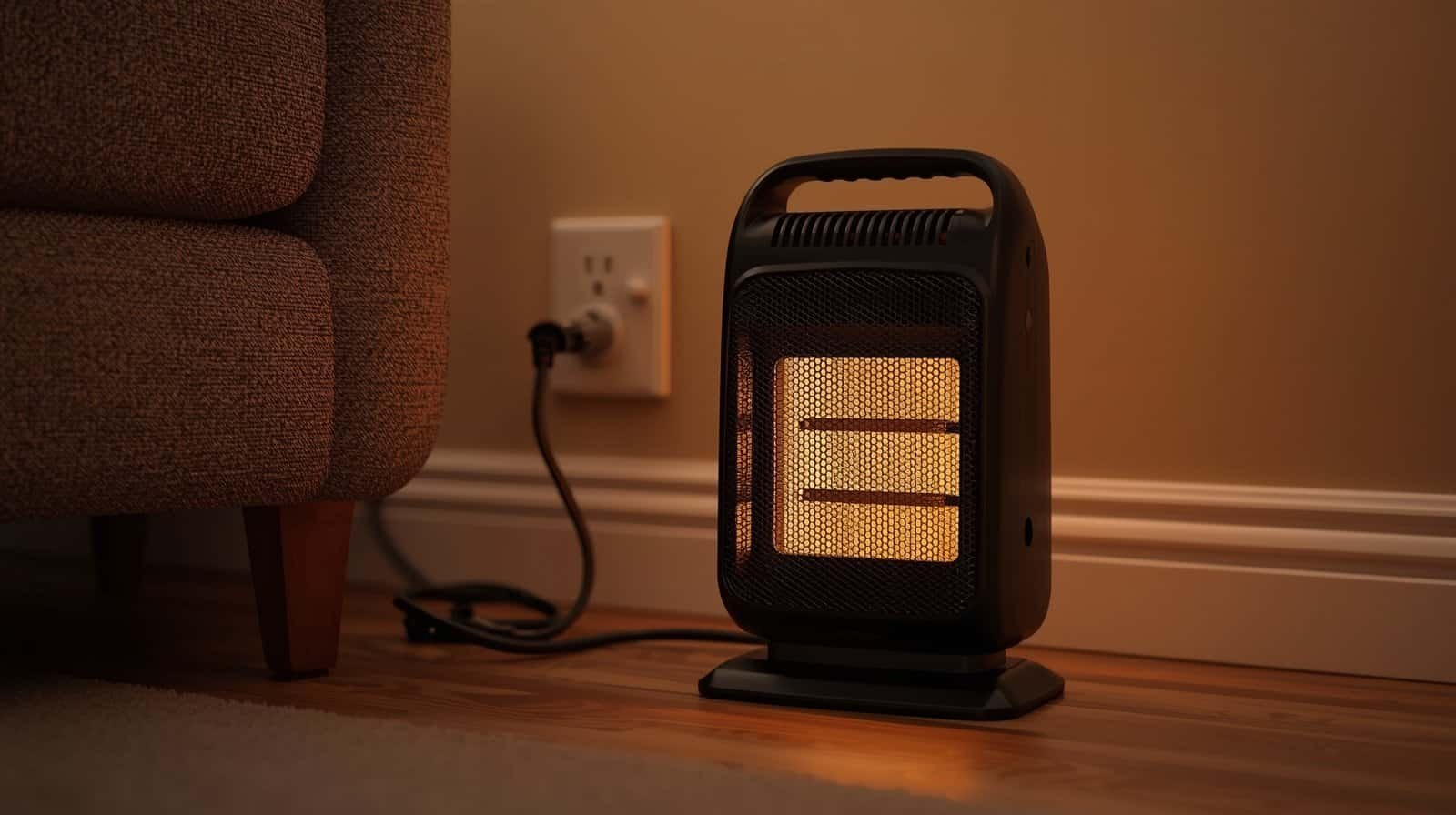
It’s a common question in winter: can you plug a space heater into a power strip when outlets are limited?
In most homes, the safest answer is no. Space heaters pull a lot of power for long stretches of time. Power strips (and many extension cords) are not designed for that kind of continuous high load. The result can be hidden overheating, damaged plugs and outlets, and in the worst cases, fire risk.
Why Space Heaters Stress Electrical Gear So Quickly
Space heaters are high-wattage devices. Many models run near the upper limit of what a standard household circuit can safely provide, and they can draw that load continuously.
That matters because overheating is often caused by resistance—tiny inefficiencies at plugs, contacts, and connections that turn electricity into heat. Heat can build gradually long before a breaker trips. If you want to understand that mechanism, see How Electrical Resistance Creates Heat Long Before Breakers Trip.
What Power Strips Are Built For (and What They Aren’t)
Power strips are designed for low-to-moderate loads that come and go—phone chargers, lamps, a TV, or a router. They are not built for devices that run hot and heavy for long periods.
Even if a power strip has a breaker or a surge protector, that does not mean it can handle a heater safely. Those features may reduce certain risks, but they don’t eliminate the core problem: high continuous current + extra connection points = more heat potential.
Why “It’s Been Fine So Far” Can Be Misleading
Overheating problems often build slowly. A strip or cord can feel normal at first, then warm, then hot—especially after the heater has been running for an hour or two.
Sometimes nothing obvious happens until a plug melts slightly, insulation weakens, or the outlet contacts lose spring tension. From there, resistance increases and the heat cycle accelerates. This is one reason electrical load problems can evolve into serious hazards over time.
Warning Signs You Should Never Ignore
If any of the signs below show up, treat it as an escalation signal. The safest move is to stop using the heater and avoid continued trial-and-error.
- Warm or hot power strip housing (especially near the cord entry)
- Warm or hot outlet faceplate where the heater was plugged in
- Burning smell (hot plastic, insulation, “electrical” odor)
- Discoloration on the plug blades or outlet slots
- Intermittent power (heater cycles oddly, lights dim when it starts)
- Crackling, buzzing, or popping near the outlet/strip
If you’ve ever wondered whether warmth is normal, this guide helps you interpret it safely: Why Outlets or Switches Get Warm During Normal Use.
Why Breakers Don’t Always Trip Even When Things Are Overheating
Many homeowners assume the breaker will “protect them” by shutting off power before anything dangerous happens. Breakers do help, but they’re primarily designed to respond to excess current and certain fault conditions—not every kind of heat buildup.
Overheating can occur at a connection point (plug, outlet contact, worn receptacle, loose terminal) without a dramatic current spike. That’s why you can have a dangerously warm connection even while everything still “works.”
If you want the deeper explanation of how overload can exist without an obvious trip, see Overloaded Circuits Without Tripped Breakers: Why It Happens and Why It’s Dangerous.
Safer Options When You Don’t Have Enough Outlets
If you don’t have a convenient outlet where you need heat, the safest approach is to avoid “workarounds” that add connection points.
- Use a different location where the heater can plug directly into a wall outlet.
- Reduce competing loads on the same circuit (other high-watt devices in the room).
- Use central heating or a lower-load option when possible for extended runtime.
If the room needs supplemental heat regularly and outlets are inconvenient, that’s often a sign the space may benefit from a professional evaluation of load capacity and outlet condition.
When This Becomes an “Electrical System” Problem
If multiple rooms rely on heaters, or if you notice repeated warmth at outlets, flickers, or nuisance trips when heaters run, the issue may be bigger than the heater itself. Older wiring, aging receptacles, shared circuits, and panel capacity limits can all contribute to unsafe heating conditions.
Conclusion
Plugging a space heater into a power strip is risky because it adds extra connection points and asks lightweight equipment to carry a heavy, continuous load. The danger isn’t always immediate—which is exactly why it catches homeowners off guard.
If your heater setup involves a strip or cord, treat it as a safety upgrade opportunity. Direct-to-outlet use and early escalation when warning signs appear are the simplest ways to reduce risk.